


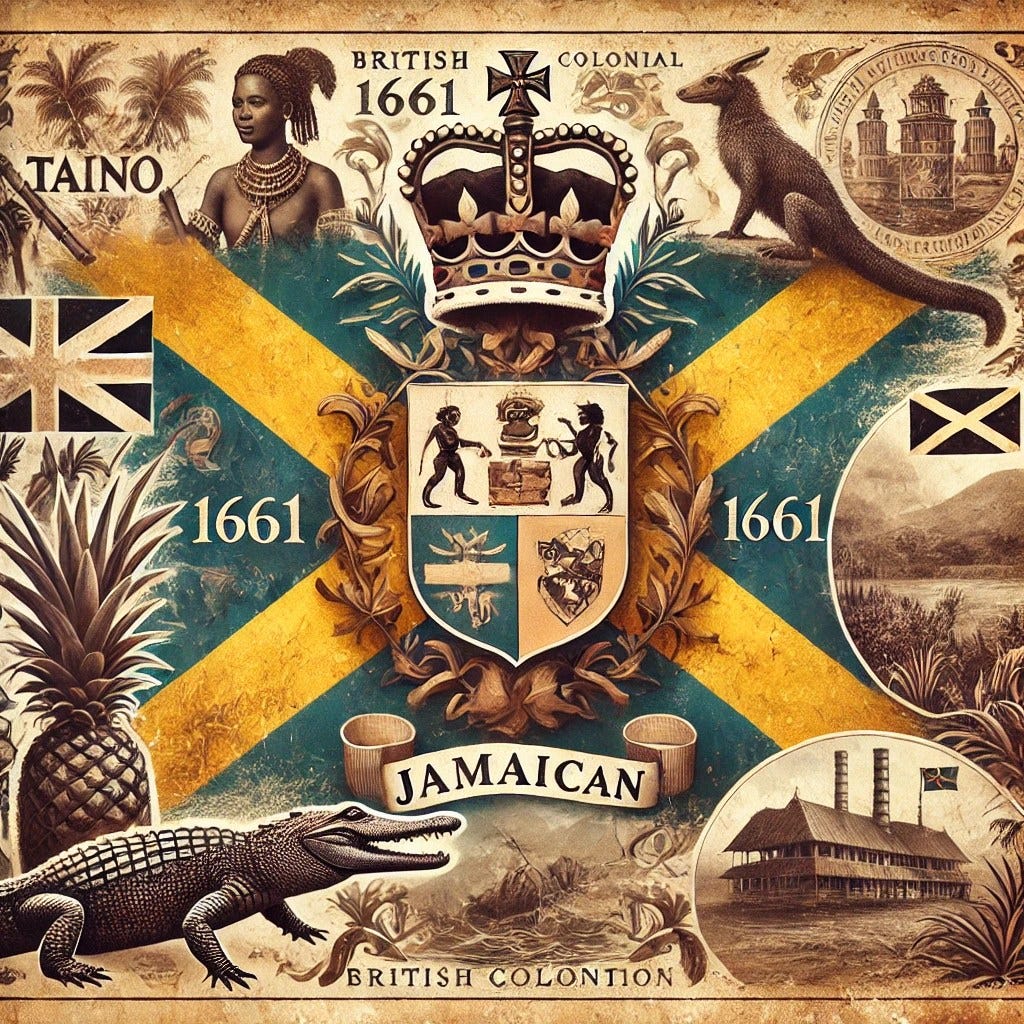
This image reads like an artefact pulled from a contested archive—part proclamation, part warning, part remembrance.
At its centre sits a crowned colonial crest, rigid and symmetrical, imposed over the diagonal cross of the Jamaican flag. The crown dominates the composition, symbolising authority claimed rather than earned. It is not Jamaican in origin, yet it occupies the visual heart of the piece, reflecting how governance, land ownership, and law were once externally imposed and internally endured.
Surrounding the crest, Jamaica’s story unfolds in carefully arranged fragments.
The word “Taino” anchors the image to its first people—often marginalised, often erased—while their presence here restores a necessary beginning. Pineapples, crocodiles, and native flora speak to the land itself: fertile, valuable, and watched closely by those who sought to extract from it. The date 1661 repeats like a stamp of possession, marking the moment Jamaica formally entered British colonial control—not …
