


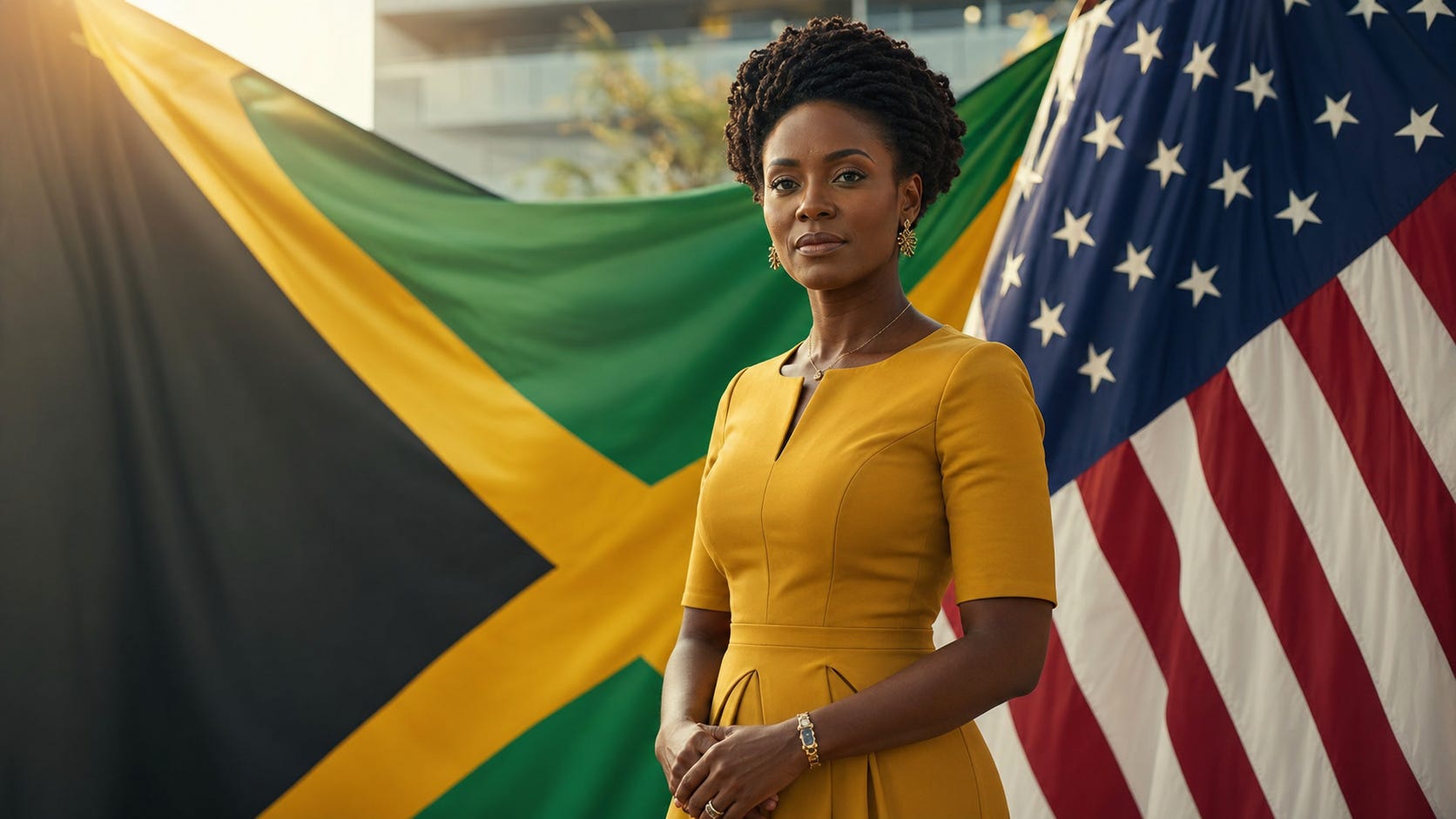
For seven months, Jamaicans seeking permanent settlement in the United States could be refused not because of their individual circumstances, but because of the passport they carried. A federal court has now declared that system unlawful. Yet the deeper question remains: when did migration become our national definition of progress?
For thousands of families, the decision came down to one word: nationality.
It did not matter that an applicant had a job waiting in America, a financially secure spouse, professional qualifications, savings or relatives prepared to provide support. Under a policy introduced by the Trump administration, Jamaicans were placed alongside nationals of 74 other countries whose immigrant visas were effectively frozen because Washington considered them collectively more likely to become dependent on public assistance.
On August 21, 2026, United States District Judge Jeannette A. Vargas brought that policy crashing into the law.
In Catholic Legal Immigration Network, Inc. v. Rubio, the Southern District of New York ruled that the State Department’s nationality-based suspension was “contrary to law” and exceeded Secretary of State Marco Rubio’s statutory authority. The court vacated the policy and set aside immigrant-visa refusals based solely upon it. Applications must once again receive individual consideration. The court case and ruling are documented by the National Immigration Law Center.
That is an important victory—but it is not a free ticket to America.
No applicant has automatically received a visa. The judgment restores a lawful process, not a guaranteed outcome. Consular officers may still refuse applicants under existing immigration law, including where the evidence suggests that a person is likely to become a “public charge.” What they may no longer do under the ruling is treat a Jamaican passport as a substitute for examining the Jamaican carrying it.
The Trump administration may appeal.
The Ban That Was Described as a “Pause”
The State Department’s policy took effect on January 21, 2026. It suspended immigrant-visa issuance to nationals of 75 countries, including Jamaica, Haiti, Barbados, The Bahamas, Trinidad and Tobago, Brazil, Colombia, Nigeria, Ghana, Pakistan and several other countries across Africa, Asia, Latin America, the Caribbean and Eastern Europe.
Washington said it was reviewing its screening procedures to prevent immigrants from becoming a financial burden on American taxpayers. Its official notice described the listed countries as presenting a high risk of public-benefit reliance. Applicants could still submit documents and attend interviews, but immigrant visas could not ordinarily be issued while the suspension remained in force. Dual nationals applying with a passport from an unaffected country were exempt. The State Department’s notice lists Jamaica among the affected countries.
Calling it a “pause” softened the language, but not the consequence. A family separated indefinitely is not experiencing a pause in the ordinary sense. A professional who has resigned from a job, sold possessions and prepared to relocate cannot store life in a waiting room. A spouse denied the opportunity to join a husband or wife is not merely delayed administratively; the architecture of that family is being altered.
The policy was especially striking because American immigration law already contained a public-charge test. The Immigration and Nationality Act instructs consular officers to decide whether an individual is likely to become dependent on government support, taking account of circumstances such as age, health, family status, financial resources, education and skills.
The question was therefore never whether America could examine an applicant’s financial position. It could.
The question was whether the Secretary of State could replace that individual assessment with a national blacklist.
Judge Vargas concluded that he could not.
The law assigns immigrant-visa adjudication to consular officers and prohibits discrimination in visa issuance based on nationality, with limited exceptions created by Congress. Rubio’s directive, the court found, predetermined the answer before the officer examined the person.
According to the judgment, the nationality-based policy directly displaced that statutory system. Reuters reported that the judge described the policy as “patently unlawful”.
In plain Jamaican language: the interview had become theatre. The applicant could bring the paperwork, answer every question and prove every qualification, but the passport had already answered for them.
What the Ruling Means for Jamaicans
The judgment applies specifically to immigrant visas—the category used by people intending to live permanently in the United States.
It does not concern ordinary visitor visas used for holidays, short family visits or most temporary business travel. It does not mean tourist visas are now easier to obtain. Nor does it erase refusals based on fraud, missing documents, criminal inadmissibility, financial concerns or any other independent legal ground.
For Jamaicans affected by the suspension, however, the decision could be significant:
Refusals based solely on the 75-country policy have been set aside.
Those applications should return to consular officers for individual adjudication.
Applicants must still satisfy all normal legal, medical, financial and documentary requirements.
Processing may not resume instantly, particularly if the US government seeks a stay while appealing.
Anyone affected should retain their case number, interview notices, refusal sheets, correspondence and screenshots of their online case status.
This is a moment for cautious relief, not careless celebration. A court has reopened the assessment process. It has not stamped anyone’s passport.
The More Uncomfortable Jamaican Question
The ruling also exposes something deeper than an argument over administrative law. It touches the mythology Jamaicans have built around migration—particularly migration to the United States.
For generations, “going foreign” has been spoken about as though it were graduation from Jamaica itself. America becomes the promotion; Jamaica, the position one is trying to leave.
That story is not entirely imaginary. America offers a vastly larger economy, broader professional markets, higher nominal salaries and access to industries that remain underdeveloped in Jamaica. For a Jamaican facing unemployment, low wages or limited mobility, migration can be rational, transformative and sometimes necessary. Many families have built homes, educated children and started businesses because someone left and sent money back.
The connection is visible in Jamaica’s remittance economy. Bank of Jamaica data show that the country receives billions of US dollars in remittances annually, with the United States traditionally accounting for the largest share. The Bank of Jamaica publishes the inflows and their source countries.
But that is only one side of the ledger.
America may pay more, but it frequently charges more for the privilege of surviving there. Housing, childcare, health insurance, transportation and taxes can consume the impressive salary that sounded enormous when converted into Jamaican dollars. A worker may earn several times more and still have less time, less space and less peace.
The Jamaican who once complained about traffic between Spanish Town and Kingston may find himself spending two hours crossing New York on trains. The person who left because groceries were expensive may discover that rent has eaten the groceries, the furniture and half the dream.
America offers opportunity. It does not issue happiness at immigration.
Is Jamaica Really the Place With Nothing to Offer?
Jamaica has serious problems, and patriotism should never be used to conceal them. Crime, weak public services, bureaucracy, unequal opportunity, unaffordable housing and stagnant wages push capable people towards the departure lounge. After Hurricane Melissa, many families and businesses are still rebuilding lives that were already financially stretched.
Telling people simply to “stay and build Jamaica” can therefore sound hollow when the country has not built systems that allow them to thrive.
Yet Jamaica also possesses advantages routinely dismissed because they do not arrive on a US payslip: community, family networks, climate, cultural belonging, proximity to nature and the possibility—particularly for remote workers, entrepreneurs and internationally paid professionals—of constructing a life with greater autonomy.
A person with secure income in Jamaica may possess something increasingly rare in major American cities: room to breathe.
There is land here. There is unfinished infrastructure waiting to become industry. There are opportunities in construction, housing, agriculture, logistics, renewable energy, technology, tourism, healthcare and the creative economy. The gaps that frustrate Jamaicans are also, in many instances, the gaps businesses can be built to fill.
That does not mean Jamaica is “ten times better” than America as an objective fact. Countries are not football teams, and migration is not betrayal. But neither should the United States be treated as automatically superior simply because its dollar is stronger.
The better question is personal and practical: Where can you build the best life with the skills, resources and relationships you actually possess?
For someone unemployed and trapped by limited opportunity, the answer may be America. Go legally, work hard, remain disciplined and build something that outlives the first paycheque.
For someone with a good Jamaican income, supportive family, housing security and realistic prospects, leaving merely because “foreign better” may be an expensive exchange of belonging for billing statements.
A Victory Against Government by Stereotype
The importance of Judge Vargas’s ruling extends beyond immigration.
A government may assess risk. It may demand evidence. It may enforce the law firmly. What it should not do—unless the law unmistakably permits it—is decide that millions of people share the same financial character because their passports share the same cover.
Jamaicans are not one economic profile. Neither are Nigerians, Brazilians, Ghanaians or Colombians. Each country produces struggling citizens and wealthy ones, dependent people and fiercely self-sufficient ones, opportunists and contributors. Nationality may describe where a person comes from; it cannot reliably calculate what that person will become.
The court did not declare America open without conditions. It declared that conditions must be applied through law rather than assumption.
That distinction matters.
The Door Is Open Again—But Look Both Ways
For Jamaicans separated from relatives or caught in the visa suspension, the judgment offers something precious: another chance to be considered as individuals.
They should use it.
But Jamaica should also use this moment to reconsider the emotional power it has surrendered to the American visa. A visa can create access, but it cannot confer human value. A denial does not make Jamaica a prison, and an approval does not make America paradise.
Perhaps the real freedom is not simply having permission to leave. It is developing a Jamaica in which remaining is no longer mistaken for failure—and reaching the point where those who depart do so from genuine choice rather than inherited desperation.
America’s door has reopened.
Jamaicans should be free to walk through it. But before packing everything, they should ask the question we have avoided for too long:
Are we moving towards a better life—or merely towards the country we were taught to call better?