


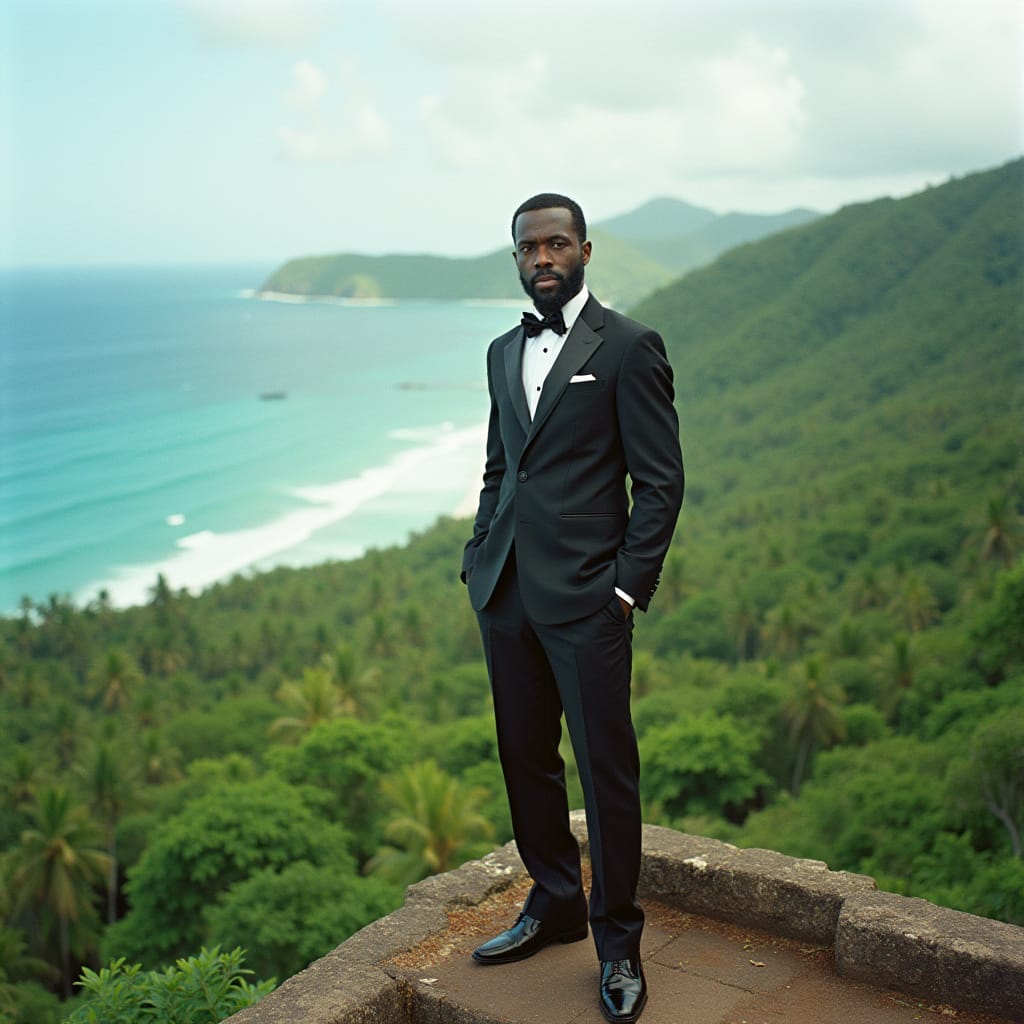
A single man stands at the edge of a constructed overlook, positioned deliberately between land and sea. His posture is upright and controlled, hands settled, gaze level and unyielding, reading as self-possessed rather than performative. Dress is formal and international, sharply tailored against a tropical landscape that does not soften or defer to him. The coastline unfolds behind in layers of forest, cliff, and water, a geography long shaped by extraction, defence, and surveillance. This is Jamaican terrain historically viewed from above, measured and claimed through elevation and distance. The figure reads as Jamaican or Caribbean-descended by bearing and context, occupying a space once reserved for colonial oversight and now reasserted through presence. Architecture here is minimal but strategic, a concrete edge marking authority, access, and vantage. The relationship between man and landscape is not romantic; it is negotiated, deliberate, and aware of history. Power is not claim…
