



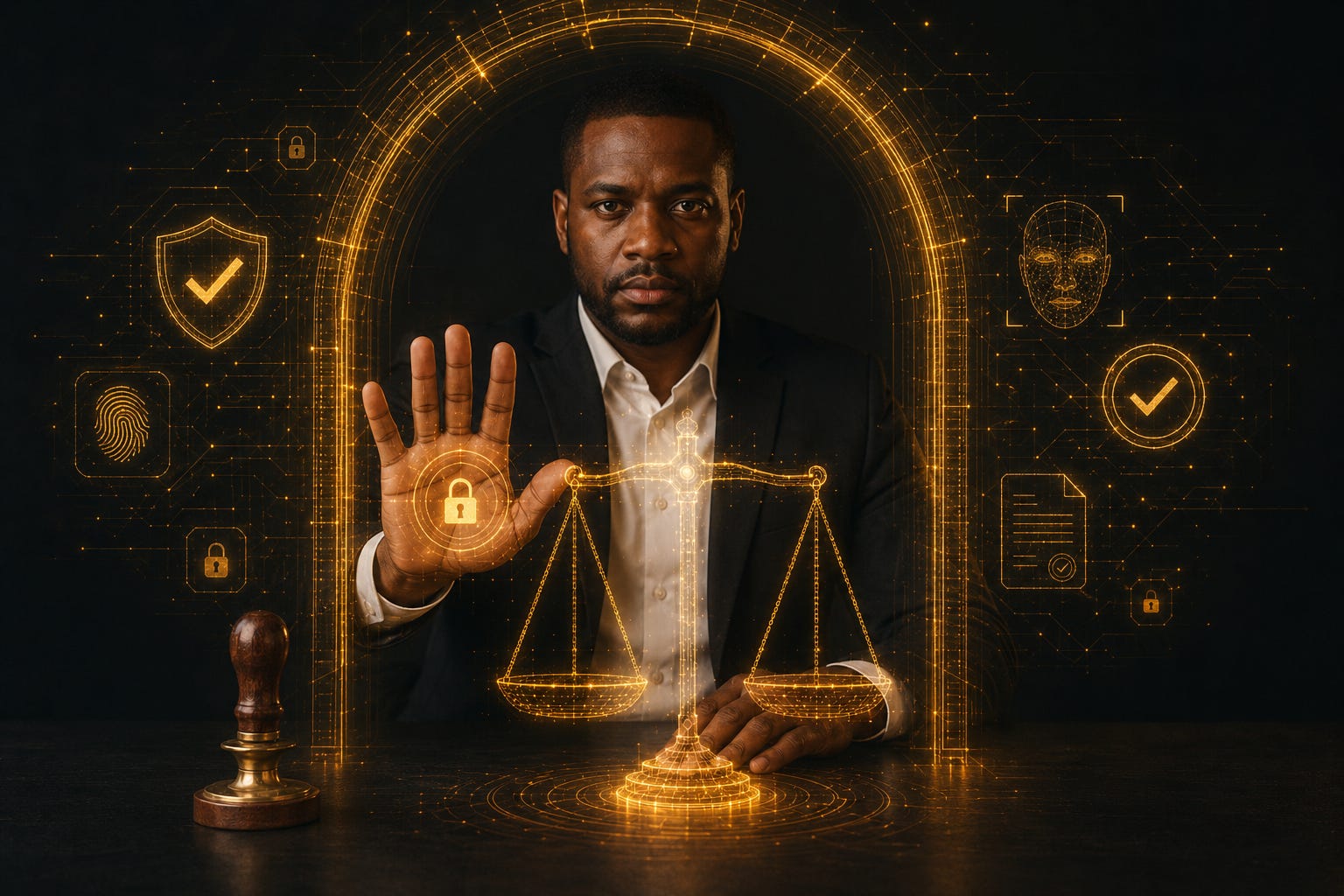
For generations, Justices of the Peace have represented something profoundly reassuring: a recognised and trusted figure within the community, authorised to examine a document, witness a signature and place the weight of an official seal behind an individual’s identity.
That role remains indispensable. The method through which it is performed, however, increasingly belongs to another age.
Jamaica’s property market now stretches across borders, platforms and time zones. A landowner may live in London, Toronto or New York while attempting to list, finance or sell property in St Mary. Documents can cross the Atlantic in seconds, yet the client may still need to locate an authorised person, print the document, obtain a handwritten signature and physical seal, scan it and send it back to Jamaica.
The transaction is digital at either end, with a paper ritual sitting awkwardly in the middle.
The question, therefore, is not whether Jamaica still needs JPs. It is whether their public function could be strengthened for a world in which identity, documents and property transactions increasingly travel through secure digital systems.
From Rubber Stamp to Digital Trust
The Ministry of Justice identifies attesting and authenticating documents under an official seal among the services performed by JPs. Their work includes certifying photographs and documents while assisting citizens with numerous legal, civic and administrative processes.
That responsibility should not disappear. Indeed, the proliferation of identity theft, document manipulation, artificial intelligence and increasingly persuasive digital impersonation may make trusted human verification more important than ever.
What deserves reconsideration is the assumption that trust can only be expressed through ink, paper and physical proximity.
A future Jamaican JP could operate through a government-approved digital platform. A person requesting certification might upload an identity document, complete an automated authenticity assessment and appear before the JP through a secure live video connection. The JP could compare the individual with the identification presented, ask the appropriate questions and apply a regulated electronic signature and digital seal.
The completed document might contain a QR code or unique verification number. An attorney, bank, real estate dealer or public agency receiving it could consult an official portal and confirm that the JP was properly commissioned, that the certification was completed at a particular time and that the document had not been altered afterwards.
This would be considerably more than a scanned image of a rubber stamp. It would create a traceable and tamper-evident chain of evidence.
“The opportunity is not simply to digitise a stamp. It is to modernise the architecture of trust surrounding it. A digital seal should tell the receiving institution who verified the document, when it was verified, how the person’s identity was established and whether anything has changed since,” said Dean Jones, founder of Jamaica Homes, Chartered Builder, Project Manager, Realtor Associate and JP.
What Other Countries Are Already Doing
Electronic notarisation and remote online notarisation are already established in several parts of the United States, although the requirements and recognition arrangements differ among jurisdictions.
The two processes should not be confused.
Electronic notarisation may involve the notary and signer meeting physically while signing and sealing an electronic document. Remote online notarisation allows the appearance to take place through live audio-visual technology, subject to the law and the safeguards imposed by the relevant jurisdiction.
Approved systems may incorporate identity proofing, electronic signatures, tamper-evident documents, recorded video sessions and electronic journals. In Pennsylvania, notaries intending to provide electronic or remote services must notify the state and identify the technologies they intend to use. Arizona similarly provides for purpose-built platforms through which the signer’s identity is verified, the parties communicate by live video and a digital seal is applied to the electronic document.
Other jurisdictions make it clear that an ordinary Zoom, Skype or WhatsApp call is not enough. The technology must be designed specifically for the function, with appropriate identity verification, secure signing and record retention.
That distinction offers Jamaica an important lesson. Digital certification should be developed as a regulated public service, not improvised through a video call followed by an emailed image of a stamp.
Convenience without evidential integrity would merely replace an old weakness with a new one.
Jamaica Has Already Taken the First Steps
Jamaica would not be beginning from zero.
JPs have already been provided with official government email accounts intended to improve accessibility and introduce greater security and consistency into their communications. The Government has also implemented an electronic-transactions policy to guide the use of secure electronic signatures and records across public institutions.
Jamaica’s justice system is moving towards integrated electronic case management, while the national digital identity programme is intended to make it easier for citizens to establish who they are when accessing public and private services.
The Government has also previously recognised the inconvenience of repeatedly requiring people - including pensioners seeking proof-of-life certification - to travel to a JP when secure digital identity could eventually support remote authentication.
The foundations are beginning to emerge: official JP email addresses, electronic-signature policy, digital identity, increasingly modernised courts and a growing public expectation that essential services should not always require another journey, queue or bundle of photocopies.
What remains absent is the coordinated framework that could bring those elements together.
What a Digital JP System Could Require
Jamaica should not simply reproduce the existing paper process on a screen. A credible digital system would need to be secure, inclusive and capable of producing evidence that can withstand later scrutiny.
It could include:
A live, searchable register confirming whether a JP is currently commissioned and authorised to provide digital services.
Government-issued electronic credentials, signatures and seals that cannot be copied and attached to unrelated documents.
Approved platforms capable of authenticating identity documents and detecting possible manipulation.
Facial comparison and “liveness” checks to establish that the applicant is a real person appearing at that moment.
Secure live video for transactions where remote appearance is legally permitted.
Electronic journals recording when, how and for whom each certification was completed.
Tamper-evident documents that reveal any alteration made after certification.
QR codes or verification numbers enabling receiving institutions to validate the certification immediately.
Clear standards governing privacy, cybersecurity, data retention and access to personal information.
Specialist training and additional authorisation for JPs who wish to provide electronic or remote services.
A transparent complaints, suspension and revocation process capable of responding quickly to misuse.
Legislation or regulations would also need to determine which functions may be completed electronically, when physical attendance remains necessary and under what conditions digitally certified documents should be recognised by public and private institutions.
Until such a framework exists, an ordinary video call and scanned JP seal should not be represented as equivalent to a legally recognised digital certification.
The integrity of the office must travel with the technology.
What It Could Mean for Jamaican Real Estate
The implications for Jamaican real estate could be considerable.
Some real estate agencies require overseas clients to provide JP- or consular-certified identification, including in circumstances where the individual is temporarily in Jamaica and able to produce the original document. Requirements may vary among organisations, but the underlying difficulty is familiar: clients and agents must move physical or scanned documents among separate institutions, each carrying its own verification responsibility.
Identification accepted by a real estate dealer may still be examined separately by an attorney, bank or another organisation. Each regulated participant must satisfy its own customer-due-diligence obligations and may apply different procedures according to the transaction, the document and the assessed level of risk.
A digital JP platform would not remove those responsibilities, nor should one certification be treated as permanent or adequate for every purpose. Identification expires, circumstances change and higher-risk transactions require enhanced scrutiny.
It could, however, provide stronger and more readily verifiable evidence than an ordinary photocopy bearing a physical stamp whose authenticity the receiving institution cannot immediately confirm.
For overseas vendors, this could mean fewer courier charges, fewer rejected documents and less uncertainty about whether a certification will be recognised. For real estate professionals, it could mean clearer records and fewer delays before a property can be listed or a transaction can proceed. For compliance teams, it could create a stronger audit trail and a faster way to identify altered documents, suspicious inconsistencies or attempted impersonation.
The same infrastructure could eventually support proof-of-life declarations, approved affidavits, statutory declarations and other routine documents, provided the relevant legislation and institutional rules allowed it.
Powers of attorney, transfers and instruments affecting registered land would still demand careful legal consideration. Digital JP certification should not be confused with notarisation, legalisation, an apostille or compliance with the statutory requirements for registering an instrument.
Those questions would require coordination among the Ministry of Justice, attorneys, notaries public, the National Land Agency, the Real Estate Board, financial institutions and data-protection authorities.
The purpose would not be to allow technology to circumvent the law. It would be to make lawful verification more intelligent, accessible and resistant to fraud.
A New Place for an Old Institution
The future JP should not be reduced to someone who places a digital image of a stamp on a PDF.
The office could evolve into that of a community-based digital trust officer: a trained and accountable person helping residents verify identity, execute approved electronic documents, access government services and navigate systems that might otherwise exclude them.
This would be particularly valuable for older people, citizens with limited mobility and communities where reliable internet access or suitable devices remain unavailable.
A digitally equipped JP might operate from a community centre, parish office, library or authorised mobile service. Using government-approved equipment, the JP could help a citizen scan an identity document, complete an authenticity check, access an approved electronic form, execute a permitted digital signature and transmit the verified record securely to the receiving institution.
The citizen would not need to own the technology or understand every technical layer supporting it. The JP would provide the human bridge.
“This could be especially valuable for older people, citizens with limited mobility and rural communities where reliable internet access or suitable digital devices may be unavailable. A digitally equipped JP could provide assisted verification using government-approved technology, whether from a community centre, parish office or authorised mobile service. The JP would become the human bridge into electronic government, allowing people to verify their identity and complete approved documents without needing to own the technology or travel repeatedly between offices,” Jones said.
Such a model could preserve one of the greatest strengths of the Jamaican JP system: its human presence within the community.
Technology would not replace that relationship. It could amplify it.
Jamaica would not have to choose between community trust and digital innovation. It could preserve the authority, accessibility and personal judgement of the JP while equipping the office for contemporary fraud prevention, electronic government and cross-border commerce.
The rubber stamp has served Jamaica well, and it will continue to have its place. But the next seal could carry that same authority far beyond the desk—one that Jamaica trusts and the world can verify digitally.
The technology already exists. The institutional foundations are beginning to appear. The inconvenience of the present system is increasingly difficult to defend.
What remains uncertain is whether Jamaica will allow the role of the JP to evolve before necessity makes the decision for it.
Could Jamaica’s Justices of the Peace Go Digital?
For generations, Jamaica’s Justices of the Peace have embodied something profoundly reassuring: public trust given a human face.
A JP is often the familiar figure to whom a citizen turns when a photograph must be certified, a signature witnessed or a document authenticated. The official seal does more than mark paper. It affirms that a recognised person has examined the evidence, identified the individual and placed personal authority behind the act.
That role remains indispensable. The question is whether the machinery surrounding it now belongs to another age.
Jamaica’s property market operates across borders, institutions and time zones. A landowner may live in London, Toronto or New York while attempting to list, finance or sell property in St Mary. Documents can cross the Atlantic in seconds, yet the client may still need to locate an authorised person, print the document, obtain a physical signature and seal, scan it and send it back to Jamaica.
The transaction is digital at either end, with a paper ritual sitting conspicuously in the middle.
The debate, therefore, is not about whether Jamaica still needs JPs. It is about whether their public function could be expanded for a world in which identity, property and commerce increasingly move through secure digital systems.
From Rubber Stamp to Digital Trust
The Ministry of Justice identifies the attesting and authentication of documents under an official seal among the services performed by JPs. Their responsibilities include certifying photographs and documents and assisting citizens with a range of legal, civic and administrative processes.
That responsibility should not disappear. Indeed, the proliferation of identity theft, manipulated documents, artificial intelligence and increasingly sophisticated impersonation may make trusted human verification more consequential than ever.
What deserves reconsideration is the assumption that trust can only be expressed through ink, paper and physical proximity.
A future Jamaican JP could operate through a government-approved digital platform. The person requesting certification could upload an identity document, submit it to an automated authenticity check and meet the JP through a secure live video connection. The JP would compare the individual with the identification presented, ask appropriate questions and apply a regulated electronic signature and tamper-evident digital seal.
The completed document could carry a unique verification number or QR code. An attorney, bank, real estate dealer or government agency receiving it could consult an official portal to confirm that the JP was properly commissioned, that the certification was completed at the recorded time and that the document had not subsequently been altered.
That would be far more than a scanned image of a rubber stamp. It would create a verifiable chain of evidence.
“The opportunity is not to replace the judgment of the Justice of the Peace, but to strengthen it. Technology could allow the JP’s authority to travel with the document, creating an auditable record that can be authenticated in Kingston, London, Toronto or New York,” said Dean Jones, founder of Jamaica Homes, Chartered Builder, Project Manager and Realtor®-Associate.
What Other Countries Are Already Doing
Electronic notarisation and remote online notarisation are already established in several parts of the United States, offering Jamaica useful examples of both the possibilities and the necessary safeguards.
The two processes should not be confused.
Electronic notarisation may involve the notary and signer meeting physically while signing and sealing an electronic document. Remote online notarisation allows the required appearance to take place through secure, live audio-visual technology.
Approved systems can incorporate electronic signatures, tamper-evident documents, identity proofing, recorded video sessions and electronic journals. In Pennsylvania, notaries intending to perform electronic or remote acts must notify the state and identify the approved technologies they will use. Arizona similarly provides for purpose-built platforms through which identity is verified, the parties communicate by live video and the completed electronic document receives a digital seal.
This is not simply a notary conducting an ordinary video call and emailing an image of a stamp. Some American jurisdictions expressly require specialised platforms capable of identity proofing, secure electronic execution and preservation of the official record.
Jamaica could draw an important lesson from that distinction. Digital certification should emerge as a regulated public service, not an improvised Zoom meeting.
Jamaica Has Already Begun the Journey
The country is not starting from zero.
JPs have been provided with official government email accounts intended to improve public access while bringing greater consistency and security to official communication. The Government has also implemented an electronic-transactions policy to guide the use of secure electronic signatures and records across public bodies.
Jamaica’s courts are moving towards an integrated electronic case-management system, while the national digital identity programme is intended to make it easier for citizens to establish who they are when accessing public services.
The Government has previously recognised the inconvenience of requiring people—including pensioners seeking proof-of-life certification—to travel repeatedly to a JP where secure digital identity might eventually support remote authentication.
The foundations are appearing. What remains absent is a coordinated framework capable of connecting them.
A digital JP service could become one of the most practical expressions of Jamaica’s wider technological transformation. Instead of digital government existing only as policy, the JP could help carry it directly into communities.
Building More Than an Online Stamp
Jamaica should not merely reproduce its existing paper process on a computer screen. A credible digital framework would require several interlocking protections:
A live public register confirming whether a JP is currently commissioned and authorised to perform digital services.
Government-issued digital credentials, signatures and seals that cannot be copied and placed on another document.
Approved platforms offering document authentication, facial comparison and biometric “liveness” testing.
Secure live video for services where remote appearance is legally permitted.
Electronic journals recording when, how and for whom each certification was completed.
Tamper-evident documents capable of exposing unauthorised changes.
QR codes or unique verification numbers enabling receiving institutions to confirm authenticity.
Clear standards governing cybersecurity, privacy, record retention and access to personal information.
Specialist training and additional authorisation for JPs providing electronic or remote services.
An effective complaints, suspension and revocation process capable of responding promptly to misuse.
Legislation or regulations would also need to determine which functions may lawfully be performed electronically, when physical attendance remains necessary and whether digitally certified documents must be recognised by public and private institutions.
Until such a framework exists, an ordinary video call followed by a scanned seal should not be presented as the legal equivalent of regulated digital certification.
The technology is only as trustworthy as the rules, institutions and accountability surrounding it.
What It Could Mean for Jamaican Real Estate
The potential benefits for real estate are substantial.
Some agencies require overseas clients to provide JP- or consular-certified identification, including in circumstances where the client may be temporarily in Jamaica and able to present the original document. Procedures can vary among institutions, but the underlying difficulty is familiar: clients and practitioners must move physical or scanned copies between organisations, each carrying its own verification responsibilities.
A digital JP platform could allow a client’s identity to be checked against the original electronic evidence, connected to a recorded certification and independently confirmed by an attorney, bank, real estate dealer or public agency.
It would not remove the anti-money-laundering responsibilities of any regulated institution. Nor should one certification remain valid indefinitely or satisfy every transaction. Identification expires, addresses change, circumstances evolve and higher-risk cases require enhanced scrutiny.
A secure digital record could, however, provide more compelling evidence than an ordinary photocopy carrying a seal that the receiving institution cannot immediately authenticate.
For overseas vendors, that could mean reduced courier costs, fewer rejected documents and less uncertainty about whether a certification will be accepted. For real estate professionals, it could produce clearer records and fewer delays before a listing or transaction proceeds. For compliance teams, it could establish a stronger audit trail and a more effective means of detecting altered documents or impersonation.
It could also make Jamaica more accessible to the diaspora. A person should not be exempted from scrutiny because he or she lives overseas, but distance should not transform a legitimate property transaction into an exhausting procession of printing, travelling, stamping, scanning and resubmitting.
Powers of attorney, transfers and other instruments affecting registered land would still require careful legal treatment. Digital JP certification should not be confused with notarisation, legalisation or compliance with the statutory requirements governing the registration of instruments.
Those questions would require coordinated consideration by the Ministry of Justice, attorneys, notaries public, the National Land Agency, the Real Estate Board, financial institutions and data-protection authorities.
The objective would not be to permit technology to circumvent the law. It would be to make lawful verification more intelligent, accessible and resistant to fraud.
A New Purpose for an Established Institution
The future JP should not be reduced to someone who places a digital image of a stamp on a PDF. That would merely reproduce the limitations of paper on a screen.
The office could instead evolve into that of a community-based digital trust officer: a trained and accountable person capable of helping citizens authenticate their identity, execute approved electronic documents, access public services and navigate digital systems that might otherwise exclude them.
This could be particularly valuable for older people, citizens with limited mobility and communities where reliable internet access or suitable digital devices remain unavailable.
A digitally equipped JP might operate from a community centre, parish office, library or authorised mobile service. Using government-approved equipment, the JP could help a citizen scan an identity document, complete an authenticity check, access an approved electronic form, execute a permitted digital signature and transmit the verified record securely to the receiving institution.
The citizen would not need to own the technology or understand every technical layer supporting it. The JP would provide the human bridge.
“A digital JP service should not be designed only for people with the newest phones, fastest internet or greatest technical confidence. Its real promise lies in taking secure verification into communities and ensuring that older people, rural residents and citizens with limited mobility are not left standing on the wrong side of Jamaica’s digital transformation,” said Dean Jones, founder of Jamaica Homes, Chartered Builder, Project Manager and Realtor®-Associate.
Such a model would preserve one of the greatest strengths of Jamaica’s JP system: its human presence within the community.
Technology would not extinguish that relationship. Properly designed, it could enlarge it.
A JP arriving with a secure government-issued tablet, document scanner and verified digital credentials could help a housebound pensioner complete a proof-of-life declaration, assist a rural landowner with an approved electronic document or enable an overseas Jamaican to verify an identity without navigating an expensive and uncertain chain of physical appointments.
The JP would remain the trusted witness. The difference is that the evidence of the act could travel securely, retain an auditable history and be authenticated long after the individual parties had left the room - or ended the video connection.
The Decision Beyond the Technology
Jamaica would not have to choose between community trust and digital innovation. It could preserve the authority, accessibility and personal judgement of the JP while equipping the office for contemporary fraud prevention, electronic government and cross-border commerce.
There would, of course, be legitimate questions.
Who would approve and supervise the technology? How long should recordings and electronic journals be retained? Which documents would qualify? Who would bear responsibility if an identity-verification system failed? How would citizens challenge an incorrect decision? Could digitally certified documents be recognised across institutions - or would clients still be asked to repeat the same exercise?
These questions are not reasons to avoid reform. They are the questions through which responsible reform begins.
The rubber stamp has served Jamaica well, and it will continue to have its place. The next seal, however, could carry that same authority far beyond the desk - one that Jamaica trusts and the world can verify digitally.
The technology already exists. The institutional foundations are beginning to appear. What remains unresolved is whether Jamaica is prepared to reimagine one of its oldest civic offices before inconvenience, fraud and global commerce make that decision unavoidable.
Perhaps the real question is no longer whether Jamaica’s Justices of the Peace could go digital.
It is who will be brave enough to begin the conversation - and what the first digitally verified seal might unlock.