


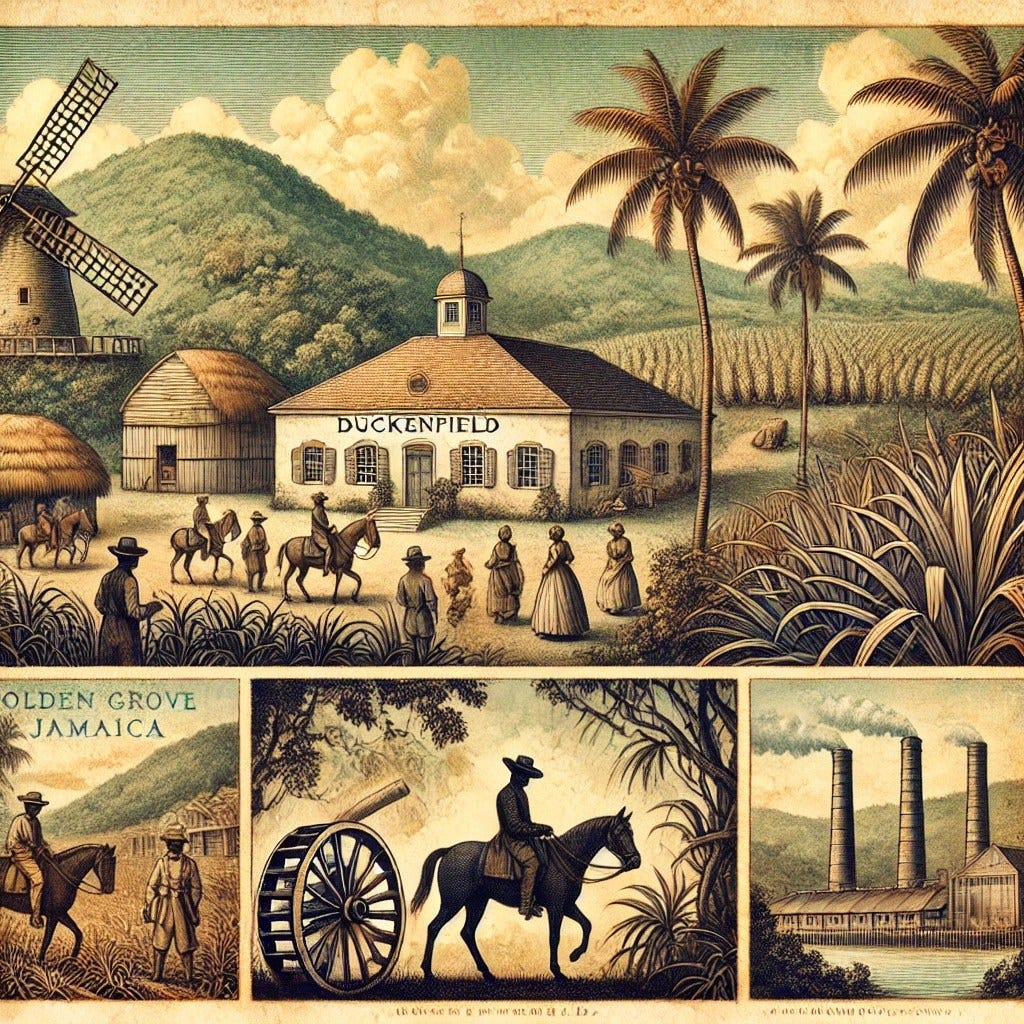
Duckenfield, located in Saint Thomas, Jamaica, has deep historical roots in plantation agriculture, particularly in sugar production. The estate, originally known as Duckenfield Hall, was established in the 18th century and was mapped by James Robertson in 1804 as a significant sugar plantation with windmills and a watermill. The estate was linked to prominent figures like John Nisbet and Jacob Franks, who oversaw its sugar and rum production in the late 1700s. The Duckenfield name itself is associated with Robert Duckenfield, who moved to Jamaica around 1724, acquiring over 5,000 acres in Saint Thomas and Kingston. He played a role in the Jamaican Assembly, representing various constituencies between 1731 and 1752. His relationship with Jane Engusson, a free woman of color, and the subsequent legal recognition of their children highlight the complex racial and social dynamics of colonial Jamaica. The estate functioned as part of the larger plantation economy, dependent on enslaved la…
