


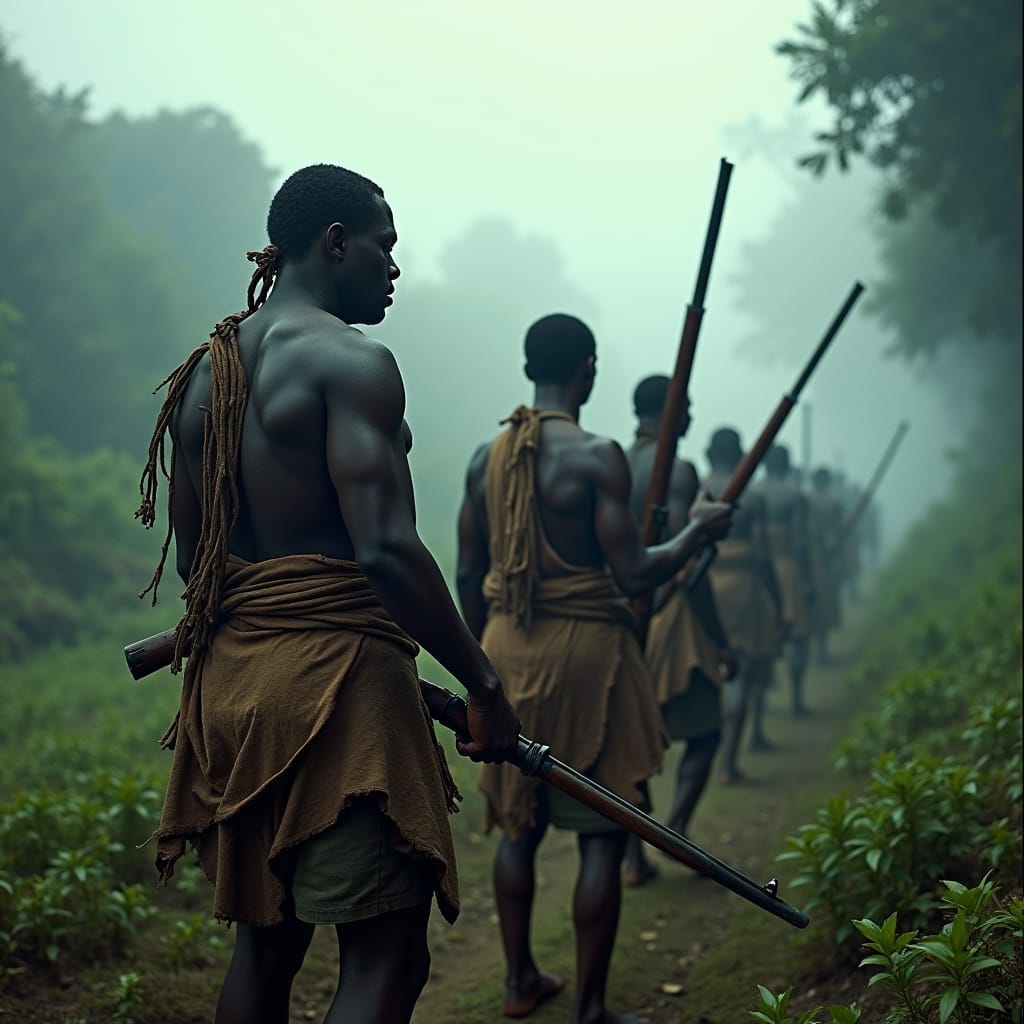
Flagstaff, located in St. James, is a historic Maroon community that played a pivotal role during the Second Maroon War of 1795. Following the war, it became a military settlement, and by 1838, the site was home to fifty-nine buildings, solidifying its place in Jamaica’s colonial history. This location offers a remarkable glimpse into the resilience and ingenuity of the Maroons and their lasting impact on the island.
The Maroons, composed of free blacks, escaped slaves, and their descendants, carved out autonomous communities in Jamaica’s rugged mountains. Early Maroons were primarily of Angolan origin, later joined by individuals of Arawak, Madagascan, and Coromantee heritage. They spoke Coromantee, a language symbolizing their cultural unity. These communities thrived outside the plantation system, using the dense forests as both a sanctuary and a strategic stronghold.
Flagstaff’s historical remnants tell compelling stories. The Military Graveyard, with twelve graves constructed from …
