


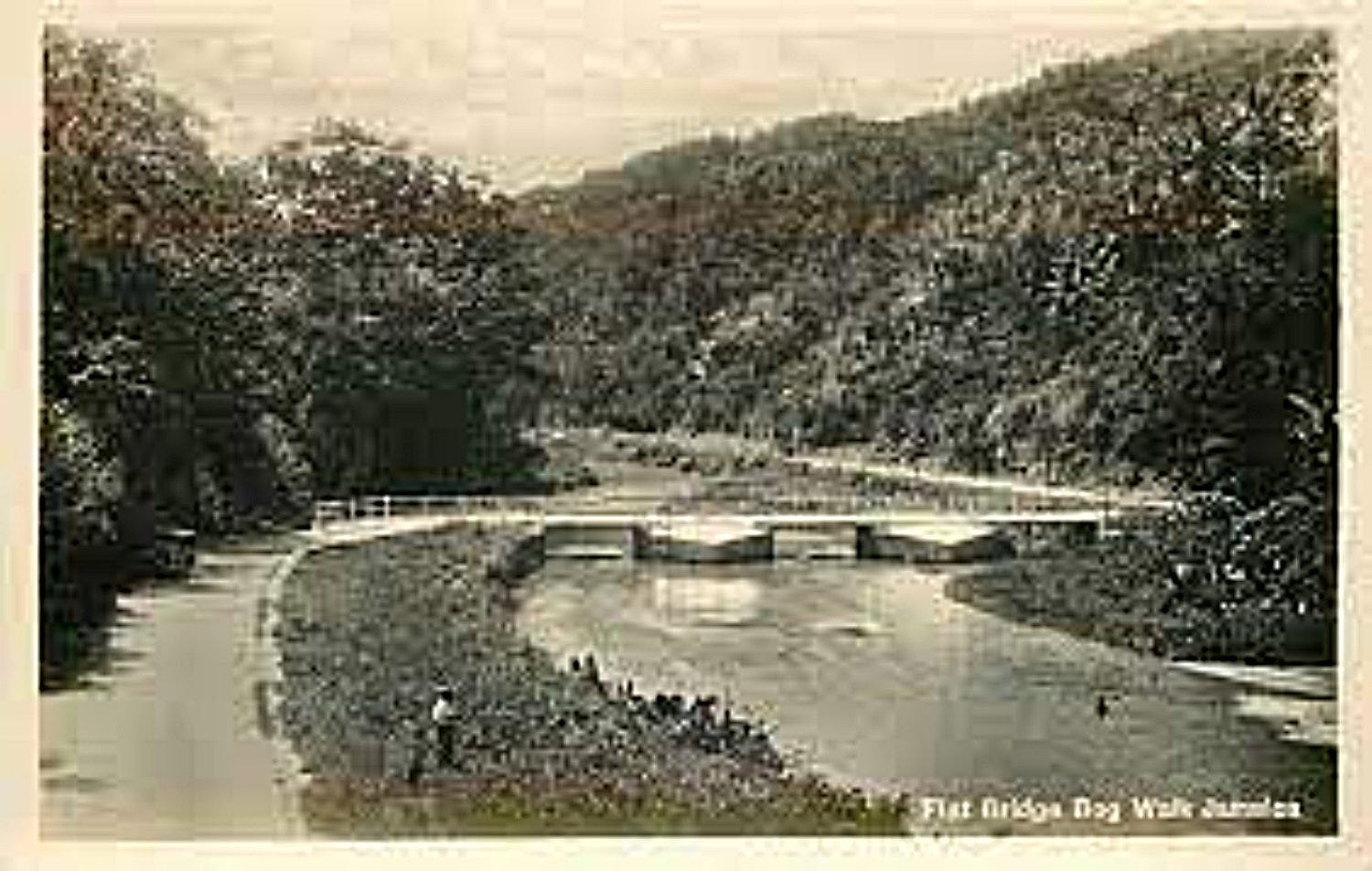
Flat Bridge, located in the parish of St. Catherine, Jamaica, stands as a significant historical and architectural landmark. While the exact date of its construction is uncertain, historical records confirm its existence post-1724. Edward Long’s History of Jamaica (1774) provides a detailed description of the bridge, highlighting its flat design, composed of planks on a timber framework. This structure rests on two piers and two buttresses extending from the riverbanks, reinforced with interlaced piles, braces, and masonry. The bridge served as a vital link across the Rio Cobre, facilitating transportation and commerce in the area.
The construction of Flat Bridge was labor-intensive and deeply tied to the history of plantation slavery. The sixteen plantations in the Bog Walk area were mandated to supply one enslaved worker per fifty to contribute to the River Road, often called Sixteen Mile Walk. These enslaved individuals performed perilous tasks, including excavating gravel, marl, li…
