

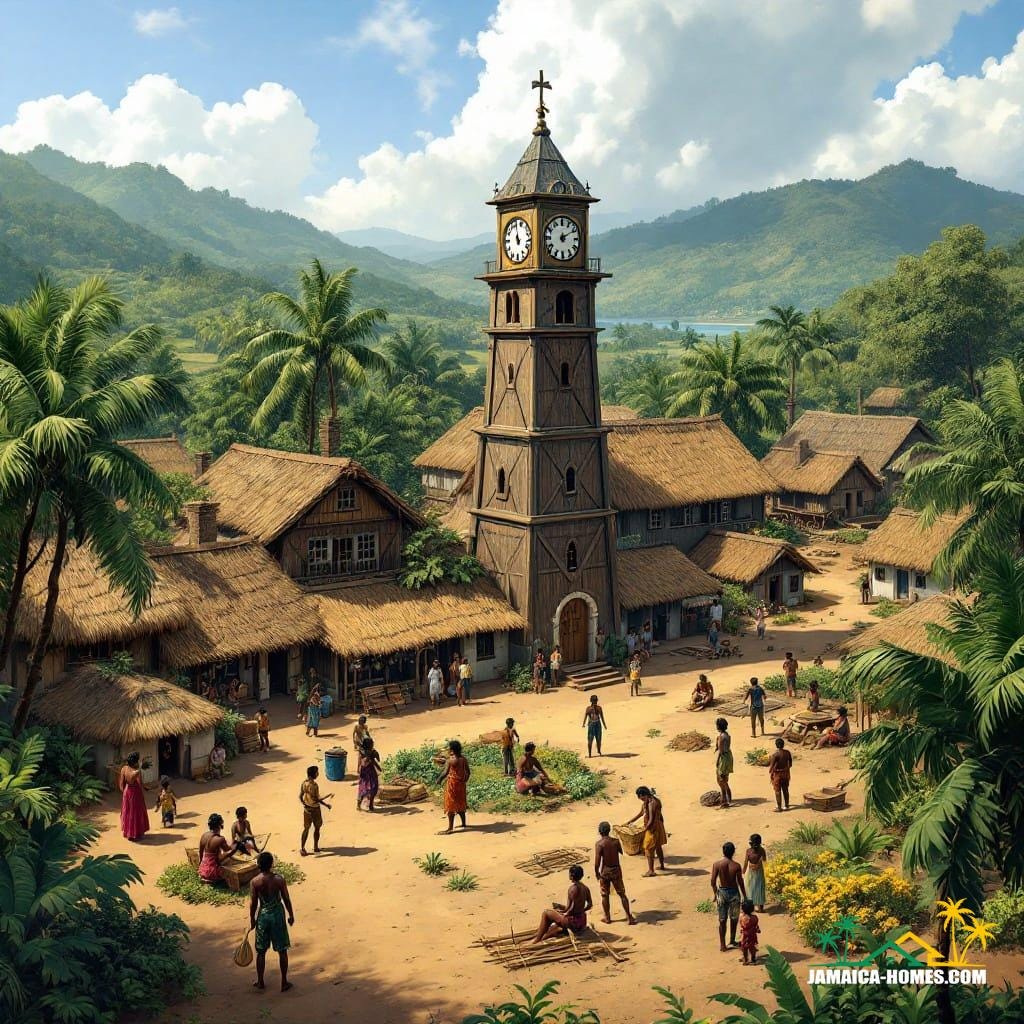
In 1838, when slavery ended in Jamaica, many freed people wanted more than just freedom—they wanted land of their own and a chance to live independently. But life wasn’t easy after slavery. Plantation owners, called planters, treated the ex-slaves unfairly. They paid very low wages and charged high rents for the houses on their land. Sometimes, they even kicked people out of their homes.
The freed people realized that as long as the planters controlled where they lived and worked, they weren’t truly free. That’s when free villages were created. These were special communities where freed people could buy small pieces of land, build their own homes, and grow their own food. These villages were often started by missionaries and other kind people who wanted to help.
In many free villages, there was a clocktower at the center. These towers became important landmarks where people would meet, talk, and even celebrate. The clocktower reminded everyone of how far they had come and marked a new t…
