



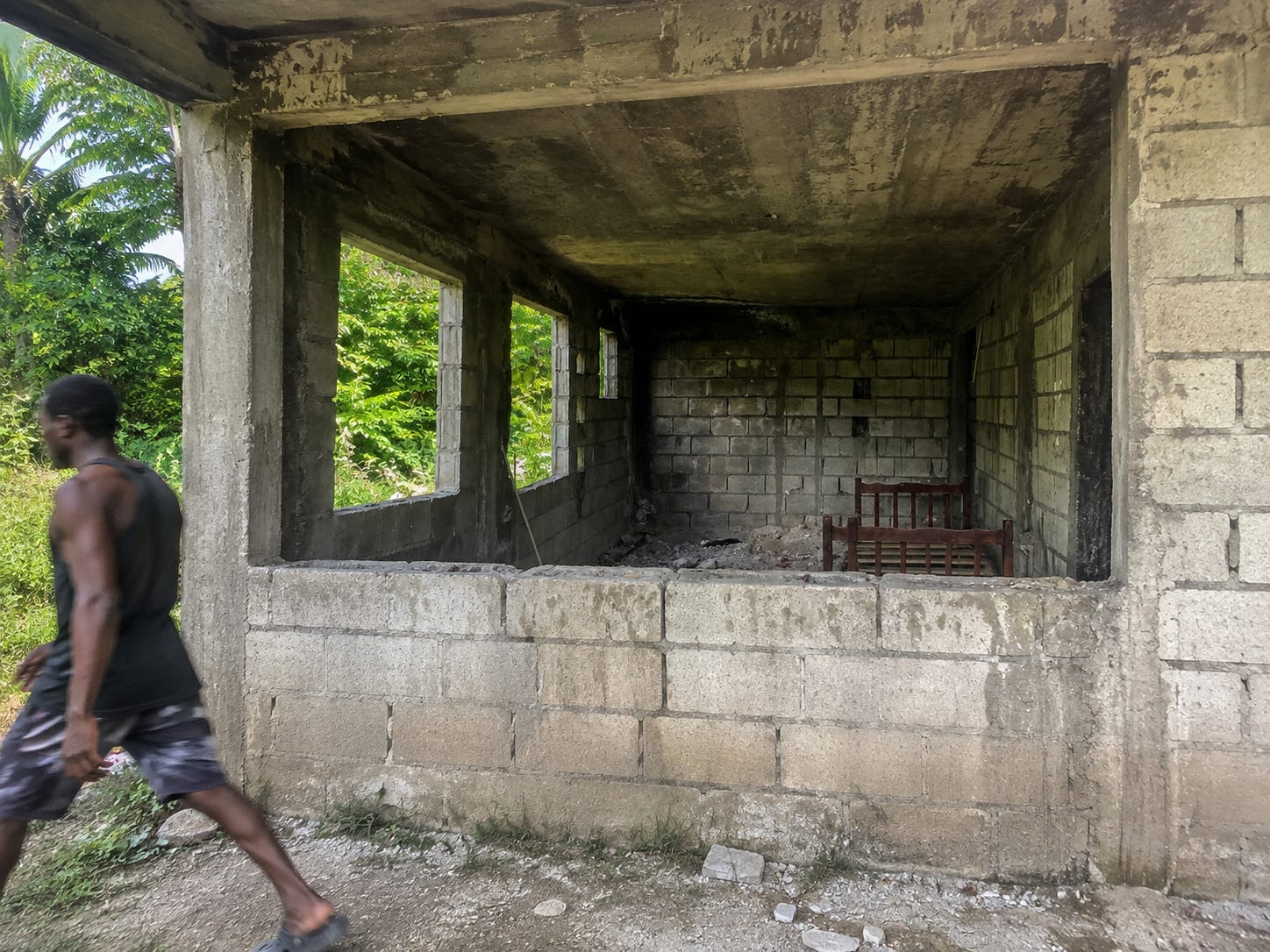
Across Jamaica, houses stand caught between ambition and abandonment.
They rise beside highways, behind zinc fences and along quiet rural roads: concrete shells with steel rods reaching into the sky, upper floors without roofs, staircases leading nowhere. Some have remained that way for five years. Others for 20.
They are so common that Jamaicans barely notice them anymore. But these buildings are not harmless scenery. They represent billions of dollars trapped in concrete, families divided, neighbourhoods diminished and housing that exists physically but cannot properly be lived in, rented, insured or sold.
Nobody knows precisely how many there are.
Jamaica recorded approximately 723,000 dwellings in 2001 and 853,660 in 2011, according to census data. The present housing stock is likely around one million units. Using regional construction figures and allowing for Jamaica’s distinctive culture of building incrementally, a reasonable estimate is that 100,000 to 150,000 houses may now be unfinished or substantially incomplete.
That is not an official statistic. The Government has never properly counted them. That failure is itself part of the problem.
Not every unfinished house is abandoned. Many are occupied by families who completed a bedroom, bathroom and kitchen before moving in. Windows may be missing, walls unrendered and reinforcing steel left exposed for the second floor that somebody still hopes to build.
Incremental construction has allowed thousands of Jamaicans to own homes without qualifying for conventional mortgages. A Christmas bonus buys blocks. A partner draw pays for steel. A relative overseas sends money for the roof. The house grows with the family and with whatever money life permits.
It is a practical response to an unforgiving housing market. But the same method can become a trap.
“Jamaica is full of unfinished houses, projects that started with excitement, big plans and probably a very optimistic budget,” said Dean Jones, founder of Jamaica Homes and a Realtor Associate. “Then life happened. People ran out of money. Some got divorced, some passed away and others simply changed direction. I have seen homes planned over five, 10 and even 20 years, only for the owner to die before the work was finished.”
An unfinished house is often described as evidence of poor budgeting. Sometimes it is. Jamaicans routinely begin six-bedroom, two-storey houses when their resources might realistically complete a modest two-bedroom home.
But money is only part of the story.
Marriages collapse. Partners who planned the house together become opponents over its ownership. A principal breadwinner becomes ill. Children migrate and lose interest. Remittances stop. An owner dies without a will. Probate drifts for years. Family members disagree about whether to finish, occupy or sell. A building conceived as a family legacy becomes the very thing tearing the family apart.
Then nature arrives.
Water enters exposed slabs. Reinforcement corrodes. Roots force their way through cracks and unfinished floors. Vines climb block walls. Mosquitoes breed in open tanks and foundations. A tree growing through the middle of a house may look dramatic in a photograph, but it is also evidence of wealth being slowly consumed.
Vacant structures can attract illegal dumping, antisocial activity and unauthorised occupants. Prolonged neglect may invite boundary encroachment, attempted takeover and, in certain circumstances, adverse-possession claims. Jamaica’s Limitation of Actions Act generally establishes a 12-year period for recovering land, although occupation alone does not automatically transfer ownership.
The consequences do not remain inside the boundary.
One deteriorating shell can affect neighbouring property values and make an otherwise stable community appear unsafe or neglected. Investors become cautious. Insurers see uncertainty. Lenders question whether the structure was approved, properly supervised or built to withstand a hurricane. A low purchase price can conceal disputed ownership, unpaid taxes, squatters, corroded steel and a demolition bill.
Government’s usual response is to announce more housing starts. Jamaica certainly needs new homes, but it also needs to confront the enormous amount of housing already started and never completed.
The cheapest home to provide may be the one already standing at 60 percent completion.
The first task is brutally simple: count them. Municipal corporations should establish a national register distinguishing active construction, occupied-but-incomplete homes, stalled projects, abandoned shells, storm-damaged properties and dangerous buildings.
Without classification, government risks punishing a working family gradually finishing its home while ignoring a hazardous structure abandoned for two decades.
Planning policy must also stop pretending that every approved dream house will be completed in one continuous operation. Incremental construction should be formally designed into the system. A family could receive approval for a small, structurally complete core house, followed by later phases for additional bedrooms, rental accommodation or an upper floor.
Every completed phase should be secure, weatherproof and safe. A modest roofed house is better than a mansion permanently open to the sky.
Completion finance is equally important. Many owners do not need another housing scheme; they need enough money to roof, wire, plumb or secure what they already own. The National Housing Trust, credit unions and commercial lenders could provide controlled completion loans, released in stages after inspection.
The Government must also address the legal paralysis following death and relationship breakdown. Fast-track probate assistance, family mediation, title regularisation and affordable legal services could return thousands of frozen properties to productive use.
Where owners disappear or refuse to secure dangerous sites, municipal authorities must act. Notices should require fencing, drainage, vegetation removal and the closure of unsafe openings. Persistent neglect should trigger clean-up charges, rehabilitation orders or, as a last resort and with court supervision, compulsory sale. Poverty should not be punished, but abandonment cannot remain consequence-free forever.
Investors also have a role. A properly regulated unfinished-property programme could match owners with buyers, small developers and contractors capable of completing stalled homes. Each property would need verified ownership, planning information, structural assessment and full disclosure of occupants and disputes.
Jones offers one warning to anyone preparing to build:
“Get to roof level as quickly as possible, because if a house is left unfinished for too long, nature will start moving in,” he said. “Building in Jamaica can be incredibly rewarding, but it can also be one of the most stressful things a person undertakes. Count the cost, budget realistically and make sure there is a credible route to finishing what was started.”
Jamaica cannot prevent death, divorce, migration or financial hardship. It can, however, prevent these private disruptions from becoming permanent public ruins.
The national response should be clear: complete the building, secure it, sell it, repurpose it or safely remove it.
What Jamaica can no longer afford is to leave another generation’s wealth standing roofless in the rain.