


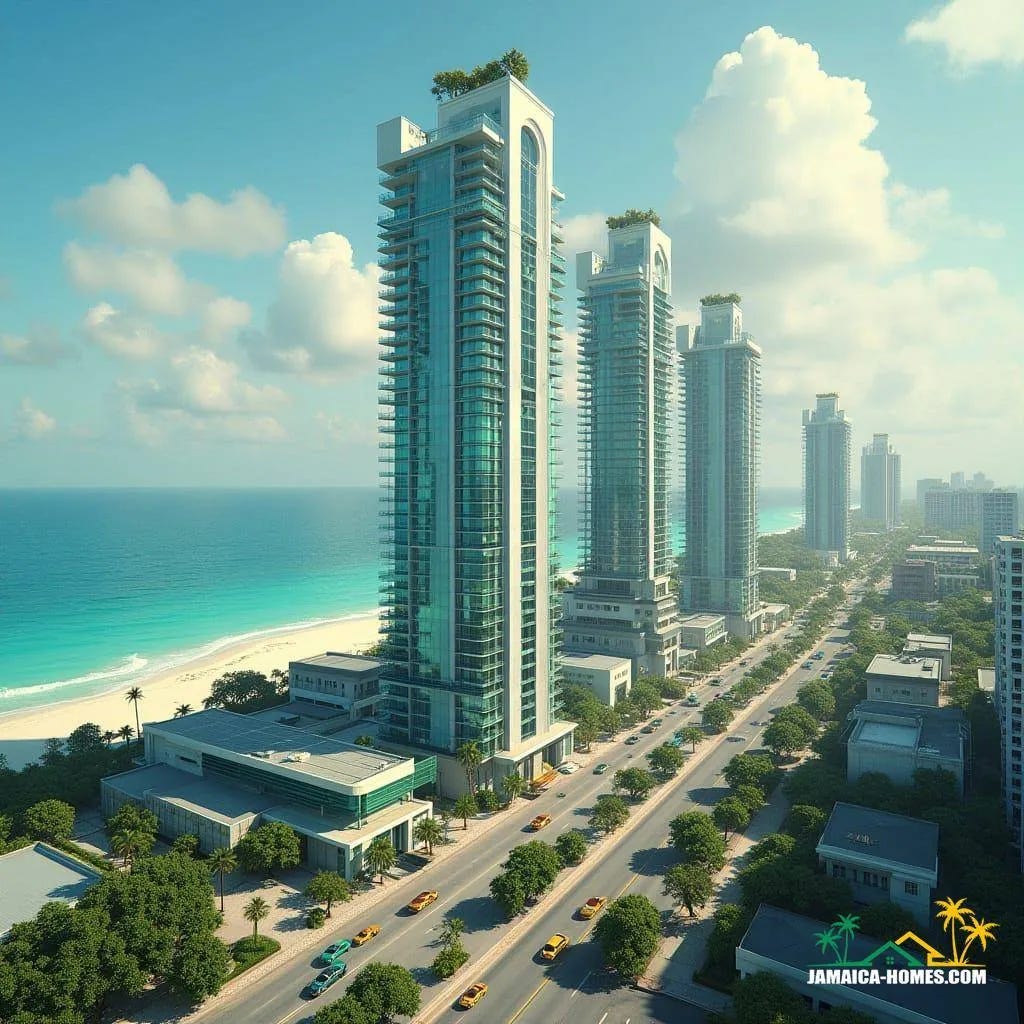
Standing on high ground anywhere on the island, with the land rolling away toward the sea and the city pressing gently against its edges, one thing becomes unmistakably clear: Jamaica is running out of room to grow carelessly. This is not a country that can afford sprawl as an accident of ambition. Every new road, every subdivision, every hillside cut comes with a cost—often paid quietly, years later, in flooding, congestion, or the loss of land that once fed communities.
The future of Jamaica’s built environment, then, is not a question of architectural fashion. It is a question of responsibility. Vertical living—done properly, thoughtfully, and in a way that reflects Jamaica’s realities—has the potential to be one of the most important tools in protecting what remains, while accommodating what is still to come.
This is not about chasing skylines or competing with global cities. It is about learning how a small island nation grows without consuming itself.
