


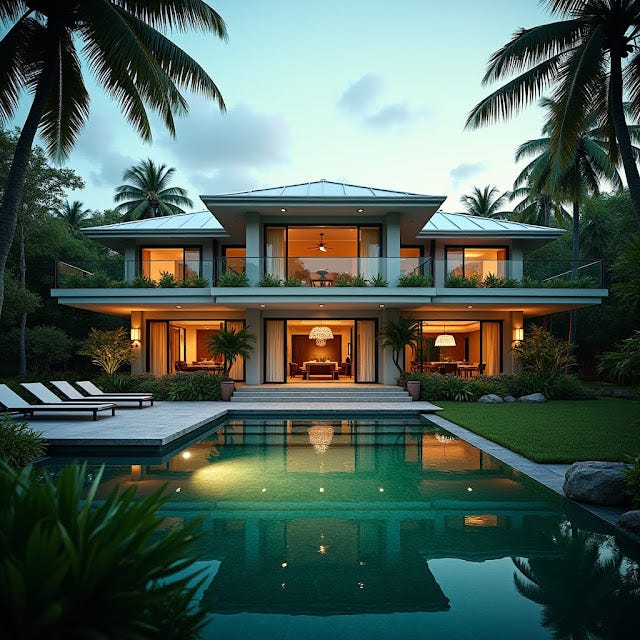
Jamaican Architecture
A living record of climate, culture, and survival shaped in timber, stone, and breeze
Jamaican architecture is not a single style but a layered story, built over centuries by necessity, adaptation, and identity. It is the quiet intelligence of a veranda catching the wind, the endurance of stone against storm, the memory of Africa, Europe, and the Caribbean meeting in form. To understand it is to read Jamaica itself, not only in its buildings, but in how people have learned to live with heat, rain, history, and change.
Before formal planning systems and modern materials, early structures in Jamaica were shaped by indigenous knowledge and later by the realities of plantation life. The island’s original inhabitants, the Taíno, built simple, circular huts known as bohíos, constructed from timber, thatch, and earth. These structures were light, breathable, and suited to the tropical climate. When the Spanish arrived in the late fifteenth century, and later the British in…
