


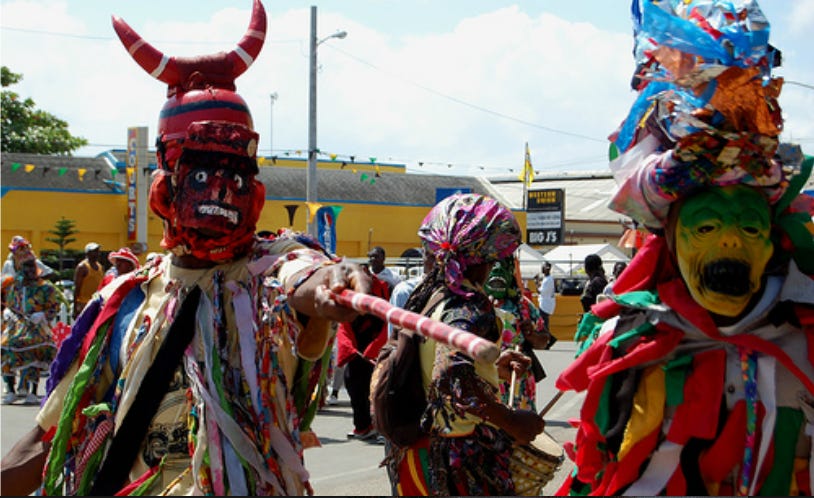
Jonkonnu, also known as Junkanoo, John Canoe, or John Kuner, symbolizes African cultural survival and resistance in the English-speaking Americas. This vibrant festival, rooted in the experiences of the enslaved, transcends celebration, embodying defiance, identity, and the enduring spirit of a displaced people.
Historical Roots
Originating during the colonial era, Jonkonnu was created by enslaved Africans in the Caribbean and Central America. It offered a cultural escape from plantation oppression and served as a powerful expression of resistance. The name “Jonkonnu” may derive from the French phrase gens inconnus (“unknown people”), reflecting the enigmatic and subversive nature of the masked performers. Over time, the festival merged African, European, and indigenous influences, evolving into a vital cultural tradition.
Features of Jonkonnu
Jonkonnu traditionally occurs during the Christmas and New Year season, featuring:
Masks and Masquerades: Central to the festival, masks symbolize t…
