


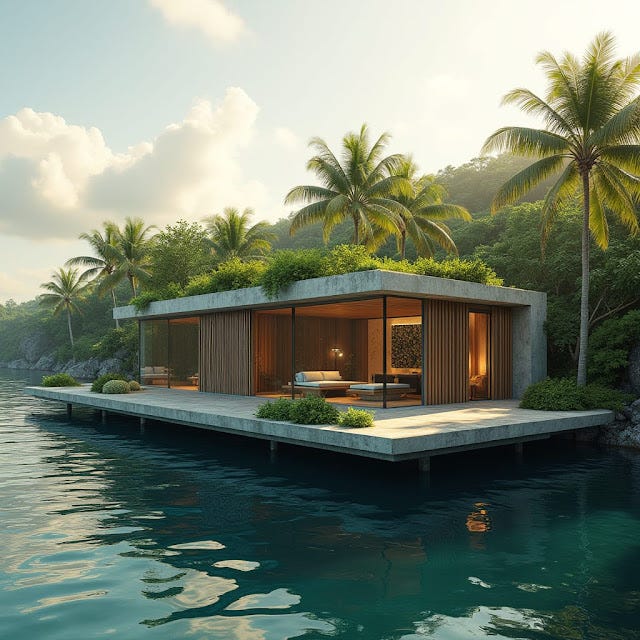
Modern architecture in Jamaica is not merely a style. It is a response.
At its simplest, modern architecture refers to a design approach that prioritises function, clean lines, and the honest use of materials over ornament. In Jamaica, that definition takes on a distinct character shaped by climate, history, and the island’s ongoing dialogue between tradition and change.
The roots of Jamaican modernism can be traced to the mid twentieth century, when independence was on the horizon and a new national identity was being imagined. Architects began to move away from colonial forms, seeking buildings that reflected both local conditions and a forward looking confidence. Concrete replaced timber in many cases, flat planes replaced decorative excess, and structures opened themselves to light, breeze, and landscape.
What emerged was not a copy of European modernism, but an adaptation. Deep overhangs shield interiors from the sun. Louvered windows allow constant airflow, reducing reliance on mec…
