



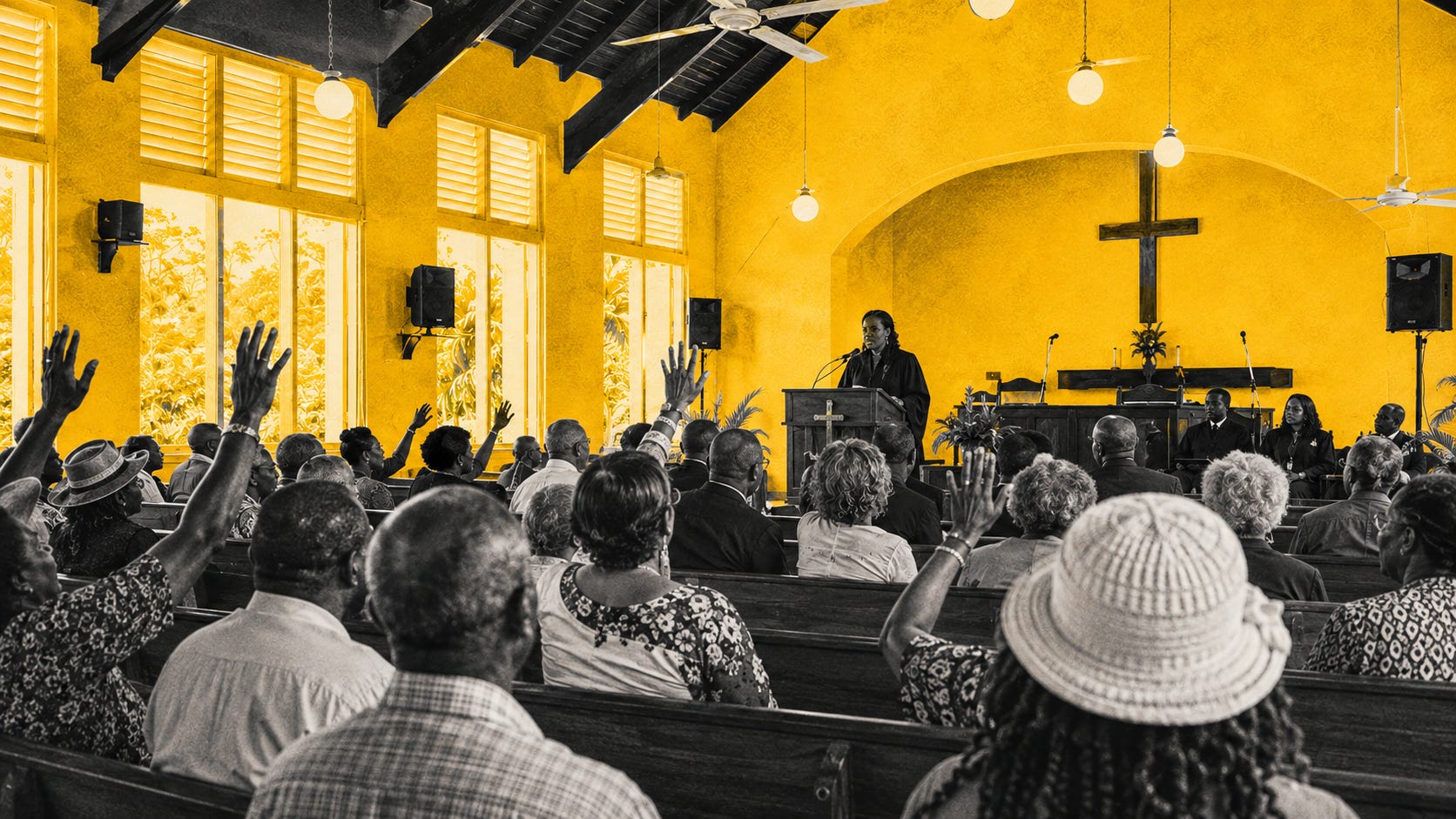
Across Jamaica, the church is often one of the most substantial buildings in the district.
Its roof rises above the surrounding houses. Its hall hosts meetings, wakes and community events. Around it may be a rectory, schoolroom, car park, burial ground or an apparently vacant parcel of land acquired by an earlier generation with plans that never quite materialised.
What Jamaica does not have is a reliable public inventory showing how much property religious organisations own, how intensively it is used or whether some of it could support housing and community development.
That omission is becoming increasingly difficult to defend.
On August 17, the Advocates for the Church and Community Movement called on Jamaica to confront what it described as the “massively unjust” landlessness inherited from slavery. It proposed parish- or county-level land committees involving churches and civil-society organisations to help address land access and informal settlements while respecting private-property rights.
Less than two weeks later, the Jamaica Umbrella Groups of Churches urged Jamaicans to pray, conserve water and support vulnerable communities as drought placed further pressure on households, farmers and livelihoods.
Both interventions are worthwhile. But they invite a more uncomfortable question: if the Church intends to help Jamaica tackle landlessness, housing insecurity and poverty, should it first establish what land, buildings and investment capacity it already controls?
This is not an argument for churches to surrender their sanctuaries or sell property whenever a developer waves a cheque. Nor should every churchyard be covered with concrete.
It is a question of stewardship. Some religious institutions may hold land and buildings capable of producing homes, income and useful community infrastructure while families around them struggle to secure somewhere decent to live.
Public support brings public questions
Following Hurricane Melissa, more than 1,600 churches were reportedly affected. Many became shelters, supply centres and places of refuge before and after the disaster.
Recognising that role, the Government allocated J$75 million to the Social Development Commission for the Community Church Clean-Up and Restoration Initiative.
By June, 84 churches in St James had received more than J$16 million. A further J$18.7 million was awarded to restore 102 churches in Westmoreland, while qualifying congregations elsewhere also received support.
The grants acknowledge something Jamaica already understands: churches are not simply buildings occupied for a few hours on Sunday. In many communities, they are part of the country’s social infrastructure. They are where residents meet, receive counselling, organise relief and find assistance when formal institutions are absent or overwhelmed.
But public investment should encourage a wider discussion about how those properties serve their communities outside worship hours.
If taxpayers help restore a church hall, could it also be designed as a certified hurricane shelter? Could it include rainwater storage, solar power, accessible bathrooms and emergency accommodation? Could an unused portion of the site support cottages for elderly residents or temporary homes for displaced families?
That would not weaken the religious purpose of the property. It might be the clearest expression of it.
The value of trust
A 2025 survey conducted across ten marginalised communities in Kingston and St Andrew found that the Church was the most trusted institution. Some 63.3 per cent of respondents selected it, describing pastors as mediators, counsellors and sources of moral guidance.
That trust has considerable value, even if it never appears on a church balance sheet.
Housing projects frequently fail before construction begins because residents distrust developers, politicians and public agencies. Churches can reach households that formal institutions struggle to engage. They often know which elderly resident is living beneath a failing roof, which family has occupied land for decades without a title and which working couple is surrendering most of its income to rent one room.
Churches can convene residents, explain proposals and help distinguish genuine community development from speculative opportunism.
But trust alone cannot construct a house. It must be combined with land, finance, professional knowledge and transparent governance. That is where the Church’s physical assets become important.
What does the Church actually own?
It is often claimed that churches are among Jamaica’s largest landowners, sometimes even described as second only to the Government. The assertion has circulated for years, but no comprehensive and publicly accessible national register appears to substantiate it.
It should not be presented as fact without evidence.
What is visible is the Church’s substantial physical footprint. Jamaica contains thousands of congregations, including established denominations that acquired property over several centuries and newer ministries that entered the market more recently.
The relationship between Christianity and Jamaican land is not new. Baptist missionaries helped establish free villages where formerly enslaved people could acquire homes and reduce their dependence on plantation owners. Faith and property ownership were once joined in a practical project of freedom.
Today, however, the public cannot easily determine how much church property is fully occupied, occasionally used, commercially rented, reserved for future expansion or no longer suited to a shrinking congregation.
“A church’s wealth should not be measured only by the value of the land beneath it, but by the amount of human need that land is helping to meet,” said Dean Jones, founder of Jamaica Homes. “An empty parcel beside a full sanctuary should make us pause when families nearby cannot find a secure place to live.”
The absence of reliable information benefits neither churches nor communities. It prevents denominations from understanding their portfolios and makes serious development partnerships harder to identify.
Jamaica does not need the compulsory surrender of church property. It needs an honest audit.
Major denominations could begin by recording every parcel and building they own, its registered owner, structural condition, insurance status, present use and development constraints. They should also establish whether the property generates income and whether any portion is vacant or significantly underused.
Some congregations may discover they possess valuable assets but cannot afford to repair them. Others may find that land acquired for expansion decades ago is no longer required. In some cases, the title may remain in the names of deceased trustees or organisations that no longer function properly.
Before bricks are laid, ownership must be clear.
Tax exemption is not a development strategy
Jamaican law provides property-tax exemptions for qualifying religious properties, including buildings held for public worship, religious schoolrooms and adjoining churchyards or burial grounds. Rectories, caretaker cottages and church halls may also qualify under particular statutory conditions.
The exemption recognises the charitable contribution of religious organisations. It is not necessarily a blanket exemption covering every property owned by every church, regardless of its use.
If church land is converted into commercial premises or residential development, its planning and tax treatment may change. Specialist legal, planning and financial advice would be essential.
That complexity should not become an excuse for leaving potentially useful land untouched indefinitely.
The decision is not simply whether to retain a vacant site or sell it permanently. A church could lease land under a long-term agreement, retain ownership while sharing development income, establish a charitable housing subsidiary or form a carefully structured partnership with the National Housing Trust, Housing Agency of Jamaica, a credit union, pension fund or experienced developer.
The land could remain part of the Church’s inheritance while being made productive.
A different kind of housing development
Not every church property is suitable for a large scheme. Road access, sewage, water, parking, drainage, slope stability, planning restrictions and construction costs will quickly dispose of some of the more imaginative proposals.
But useful development does not always require hundreds of apartments.
A suitable site might accommodate a handful of starter homes, rental cottages for elderly people, supported accommodation for young adults leaving state care or temporary housing for women escaping abusive relationships.
Other possibilities include homes for retired pastors, rooms for students and essential workers, rent-to-own units or mixed-use buildings with commercial space below and apartments above. An empty rectory or former schoolroom might be rehabilitated instead of demolished.
“The choice is not between preserving the Church’s mission and developing its property,” Jones said. “Used carefully, housing can become part of that mission. The Church can retain its land, protect its legacy and still create homes that restore dignity, strengthen families and generate income for future ministry.”
Affordable housing must nevertheless be financially credible. A low rent achieves little if the roof begins leaking and there is no reserve for insurance, maintenance or management.
Compassion may begin the project. Competence must sustain it.
The dangers behind the opportunity
Church leaders have good reason to proceed cautiously. Land is easily lost and almost impossible to replace.
An inexperienced congregation could sign an unbalanced agreement, accept a poor valuation or hand control to a developer whose ambitions differ sharply from those of the community. Disputes could arise over who authorised the transaction and where the proceeds went.
There is also the familiar danger that a development promoted as “affordable” eventually reaches the market at prices the intended residents cannot pay.
Every substantial transaction should therefore include an independent valuation, specialist legal representation, planning and environmental assessments, transparent partner selection and clear declarations of conflicts of interest.
The agreement should define affordability, protect the Church’s continuing interest and require audited reporting. No congregation should dispose of valuable property merely because a persuasive developer arrives with glossy renderings and a promise of easy money.
Stewardship is not demonstrated by announcing a development. It is demonstrated by protecting the asset and ensuring that the promised public benefit remains after the photographers leave.
Begin with ten sites
Jamaica does not need to wait for every denomination to complete a perfect property register.
The Government, National Housing Trust and recognised church umbrella groups could identify five to ten willing congregations with potentially suitable sites. Each property could undergo preliminary title, planning, infrastructure and financial assessments.
The pilot should include urban, rural and hurricane-affected communities. It should test different models instead of pretending one solution will work everywhere.
One site might support elderly rentals. Another could accommodate starter homes. A rural congregation could combine several houses with agriculture, rainwater storage or a community enterprise. An urban church might replace an ageing single-storey hall with a building containing worship space, offices and rental apartments.
The findings, including the projects that prove unworkable, should be published. Churches would then have Jamaican evidence to study rather than relying entirely on schemes developed abroad.
The land beyond the church door
It would be unfair to present every Jamaican church as wealthy. Many congregations are struggling to repair roofs, pay insurance and meet ordinary expenses. Some properties that appear “land rich” may be cash poor, legally constrained or unsuitable for development.
Those difficulties make professional property management more important, not less.
The Church is asking Jamaica to act on landlessness, family instability, drought, poverty and disaster recovery. Its moral voice remains influential, and communities continue to place substantial trust in it.
The next step is to connect that influence with the physical assets already held in religious stewardship.
Churches do not need to become speculative property companies. Ministry should never be measured by the value of a real-estate portfolio.
But stewardship cannot always mean preserving every property exactly as it is while the need beyond the church gate continues to grow.
A church building can be sacred and still work harder. Land can remain part of a religious mission while giving someone a home. Investment can produce income without becoming greed. Development can be commercially disciplined and morally purposeful.
The question is no longer simply how much land Jamaica’s churches own.
It is what that land is doing for the people who live around it.