


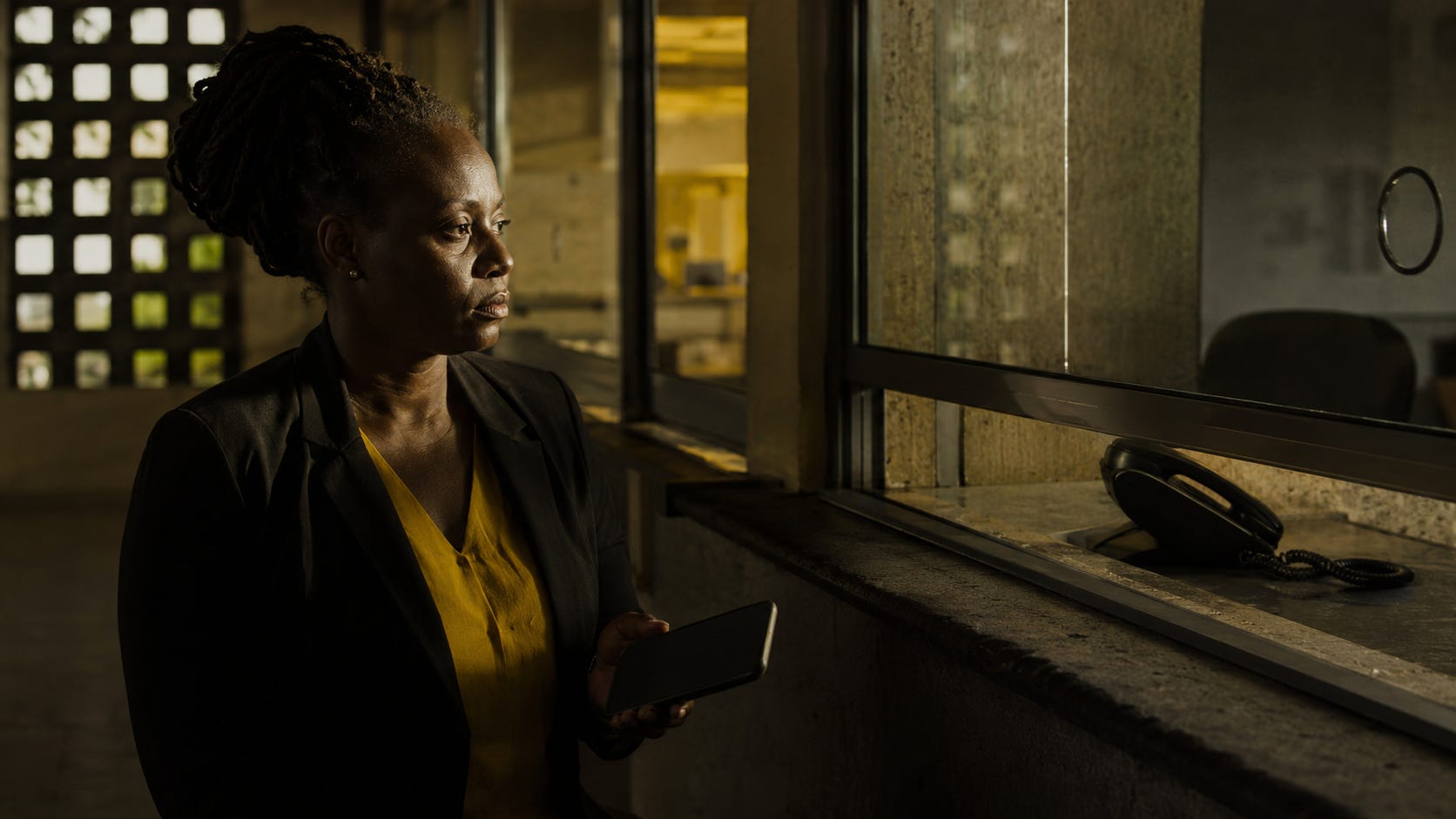
There is a peculiar form of silence in Jamaica. It does not usually appear at the beginning of a conversation. At first, everything can seem perfectly agreeable. The greetings are warm, telephone numbers are exchanged and assurances are offered. Then you ask a question requiring somebody to make a decision, find information or accept responsibility.
The machinery stops.
In a shop, the person may simply stare at you. On WhatsApp, the comforting blue ticks appear, but no answer follows. An email disappears into an administrative Bermuda Triangle. The telephone rings until optimism itself gives up.
No acknowledgement. No explanation. No “I do not know, but I will find out.”
Nothing.
I call it the Jamaican Freeze.
This is not a scientific term, nor is it an accusation against Jamaicans generally. Jamaica contains some exceptionally resourceful, responsive and conscientious professionals. They understand that service is not smiling when things are easy; it is taking responsibility when they are not.
Yet the freeze is real enough to be recognised across shops, agencies, brokerages, employers, utilities and public authorities. Returnees, diaspora investors and people who have relocated to Jamaica frequently describe the same experience. Communication flows until the question becomes difficult, sensitive or inconvenient. Then the shutters descend.
“The Jamaican Freeze begins exactly where accountability starts. The question gets harder, ownership disappears and silence is delivered as the answer,” says Dean Jones, founder of Jamaica Homes and a Realtor Associate.
This is not merely anecdotal frustration dressed up as social commentary. In January 2025, the Office of Utilities Regulation reported that mystery-shopping exercises had uncovered inadequate customer engagement, inconsistent communication, unclear processes, accessibility problems and poor responsiveness among utility providers.
In July 2026, a Jamaica Observer commentary again confronted the country’s customer-service failures, noting that the Bank of Jamaica was putting financial institutions on notice over complaint handling and tighter response timelines. Different sectors, different buildings, but apparently the same faulty wiring. Office of Utilities Regulation, Jamaica Observer
The customer is left chasing an answer that should have been volunteered.
That is more than irritating. Silence costs money. It delays transactions, unsettles families, weakens legitimate complaints, kills employment opportunities and makes ordinary business feel unnecessarily adversarial.
It also breeds suspicion.
When an authority stops responding after a valid complaint touches somebody influential, well-connected or simply uncomfortable to challenge, the complainant is left to construct an explanation. Was the matter forgotten? Was somebody frightened? Did somebody make a telephone call? Is the silence incompetence, favouritism or a deliberate burial?
Perhaps there is an innocent answer. Perhaps nobody knows who owns the problem. The employee may be poorly trained, badly managed, underpaid or terrified of making the wrong decision. A supervisor may be permanently “in a meeting,” that mysterious Jamaican location from which remarkably few decisions return.
But customers cannot see the internal dysfunction. They only see a closed door.
“Silence is not neutral when somebody’s money, home, livelihood or complaint is sitting on the other side of it. Silence transfers the organisation’s failure directly onto the citizen,” Jones says.
In real estate, that failure can be particularly brutal.
Buying or selling a home is already an anxious undertaking. Clients need clear information about fees, offers, titles, financing, taxes, deposits, timelines and what happens next. Yet buyers and sellers repeatedly complain that agents do not return calls, explain procedures or provide meaningful updates.
A person preparing to spend millions of dollars should not be reduced to detective work simply to establish whether an email was received.
Of course, no real estate professional can provide unlimited free consultancy. Boundaries matter. An introductory explanation can be concise, with detailed advice reserved for formally engaged clients. But a professional boundary is not a communications blackout.
There are perfectly respectable answers: “Here is the basic position.” “I need to verify that.” “This requires a signed client agreement before I can advise you further.”
Each establishes where matters stand. Vanishing establishes only that the client chose the wrong professional.
“A client does not expect a Realtor to know everything. The client expects honesty, ownership and a return call. ‘I will find out’ is professional. Disappearing is not,” Jones says.
The same standard should apply to brokerages, employers, retailers and public bodies. If the answer is no, say no. If recruitment has closed, say so. If there is a delay, acknowledge it. If an enquiry reached the wrong department, redirect it.
Basic decency should not require three reminders, two personal contacts and an uncle who knows somebody in Kingston.
Modern technology has made the freeze more absurd. Organisations proudly advertise email addresses, online forms, WhatsApp numbers and customer-service lines, creating an impressive façade of accessibility. Yet a communications channel without human ownership is digital scenery. The address exists; the response does not.
Automated acknowledgements make matters worse. “Your enquiry is important to us,” they announce, shortly before demonstrating precisely how unimportant it is.
This is not simply a customer-service problem. It is an economic one.
Jamaica competes for investment, professional skills, returning residents and international confidence. Every abandoned enquiry tells a potential customer or investor that completing business may depend less upon a reliable process than persistence, proximity or personal connections.
That undermines good organisations too. Responsible professionals are forced to compensate for systems that have trained customers to expect pursuit rather than service. Competence becomes exceptional when it should be routine.
The solution is hardly revolutionary. Organisations need named ownership of enquiries, published response targets and functioning escalation routes. Staff must be permitted to say they do not yet know something and then be required to find out. Complaints should receive reference numbers and scheduled updates. Managers should audit abandoned calls, unanswered emails and unresolved cases.
Real estate brokerages should establish communication standards before accepting listings or clients. Public authorities should recognise that a complaint does not disappear merely because nobody answers it.
Most importantly, leaders must stop pretending silence represents the absence of a decision. Silence is a decision. It tells the customer that their time, money and concerns rank beneath the organisation’s discomfort.
“Jamaica cannot advertise world-class service while normalising unanswered telephones, dead emails and frightened decision-making. A country moves at the speed of its follow-up,” Jones says.
The Jamaican Freeze is not an immutable part of the national character. It is learned avoidance, protected by weak management and tolerated because the person needing the answer usually carries the burden.
It can be unlearned.
Answer the telephone. Acknowledge the email. Explain what happens next. If you do not know, find out. If you cannot help, say so. If the question is uncomfortable, that is probably when answering it matters most.
People can accept delay, disappointment and even a firm no.
What is gut-wrenching is being treated as though their
I can’t reproduce Kevin McCloud’s exact voice, but I can give it that sharply observant, architectural style: intelligent, dryly witty, distinctly British and unafraid to expose where the structure has failed.
The Jamaican Freeze: When Silence Becomes the Answer
There is a peculiar kind of silence in Jamaica. It is not peaceful, reflective or remotely accidental. It tends to arrive at precisely the moment when somebody is required to think, decide, explain or accept responsibility.
A straightforward conversation may proceed perfectly well. Then comes the difficult question.
The shop assistant freezes. The company representative disappears. The official email address becomes a digital graveyard. If you are standing in front of the person, you may receive a stare of almost architectural permanence. If you are communicating by telephone, WhatsApp or email, the exchange simply ends.
No acknowledgement. No explanation. No promise to investigate. Nothing.
I call it the Jamaican Freeze.
This is not an accusation against every Jamaican worker or organisation. Jamaica has many excellent professionals who communicate clearly, solve problems and understand that service involves rather more than possessing a telephone. But there is a recurring pattern across shops, brokerages, employers, utilities, businesses and public authorities. Everything moves reasonably well until the question becomes difficult, unfamiliar, sensitive or inconvenient.
Then the shutters descend.
“The Jamaican Freeze begins exactly where accountability starts. The question becomes harder, ownership disappears and silence is delivered as though it were a legitimate answer,” says Dean Jones, founder of Jamaica Homes and a Realtor Associate with Coldwell Banker Jamaica Realty.
The evidence is not confined to private frustration. In January 2025, the Office of Utilities Regulation reported that mystery-shopping exercises had identified inadequate customer engagement, inconsistent communication, unclear processes, poor accessibility and weak responsiveness among utility providers.
In July 2026, the Jamaica Observer again examined poor customer service, noting that the Bank of Jamaica had begun putting financial institutions on notice over complaint handling and response timelines. Different sectors, different buildings, but apparently the same defective wiring. Office of Utilities Regulation, Jamaica Observer
The customer is left chasing an answer that should have been provided without pursuit, pleading or the discovery of somebody’s influential cousin.
Silence of this kind is not merely irritating. It has consequences.
It delays transactions, unsettles families, kills job applications, weakens complaints and costs people money. It turns simple enquiries into exhausting campaigns. It also breeds suspicion. When an authority stops communicating after a valid complaint becomes uncomfortable, particularly where someone influential or well-connected may be involved, the complainant is left to determine whether the silence represents incompetence, fear, favouritism or deliberate obstruction.
None of those possibilities inspires confidence.
There may, of course, be less sinister explanations. Perhaps nobody knows who owns the matter. Perhaps the employee has not been trained. Perhaps a manager must approve the answer but has developed a similar allergy to replying. Perhaps staff are afraid of making mistakes in organisations that punish initiative more reliably than inertia.
But customers cannot see the internal machinery. They see only the result: a closed door, an unanswered telephone and an organisation behaving as though the person outside has ceased to exist.
“Silence is not neutral when somebody’s money, home, livelihood or complaint is trapped on the other side of it. Silence transfers the organisation’s failure directly onto the citizen,” Jones says.
In real estate, the damage can be particularly cruel.
Buying or selling property is already complicated enough. Clients must navigate offers, titles, financing, deposits, taxes, commissions, lawyers, surveyors and timelines that occasionally seem governed by the movement of tectonic plates. They need information. They need updates. Most of all, they need to know that somebody is actually dealing with the matter.
Yet buyers and sellers repeatedly complain that agents do not return calls, explain procedures or provide updates. A person preparing to spend or receive millions of dollars should not have to conduct a forensic investigation simply to establish whether an email was opened.
Real estate professionals cannot provide unlimited free consultancy. That is understood. Boundaries are necessary, and serious advice may require formal client engagement. But a boundary is not a blackout.
A professional can say, “Here is the basic position.” They can say, “I need to verify that.” They can explain that more detailed advice requires a signed client agreement. These are clear, reasonable responses.
Disappearing is not a professional boundary. It is professional failure.
“A client does not expect a Realtor to know everything. The client expects honesty, ownership and a return call. ‘I will find out’ is professional. Vanishing is not,” Jones says.
The same principle applies when somebody approaches a brokerage, transfers between organisations, applies for a position or submits a complaint. If the answer is no, say no. If recruitment has ended, explain that. If there is a delay, acknowledge it. If the enquiry has reached the wrong department, redirect it.
Basic decency should not require a task force.
Modern technology has made the problem more visible. Organisations display email addresses, online forms, WhatsApp numbers and several telephone lines, creating an impressive façade of accessibility. But a contact channel without somebody responsible for answering it is simply digital decoration.
The automated response arrives immediately, announcing that the enquiry is important. Then nobody does anything with it. It is customer service performed as theatre: an elegant front elevation attached to a building with no rooms.
This matters economically. Jamaica competes for investment, skilled professionals, returning residents and international confidence. Every abandoned enquiry suggests that completing business may depend less on transparent systems than on relentless persistence, physical proximity or knowing the correct person.
That perception damages a country filled with capable, ambitious and resourceful people. Excellent professionals are forced to compensate for organisations that have trained customers to expect pursuit instead of service.
The solution is not revolutionary. Every organisation needs clear ownership of enquiries, published response targets and functioning escalation routes. Complaints should receive reference numbers and scheduled updates. Managers should examine unanswered calls and abandoned email chains. Staff should be authorised to admit when they do not know something and required to find out.
Real estate brokerages should establish communication standards before accepting clients or listings. Public authorities should measure service by resolved enquiries, not the number of contact channels decorating their websites.
Above all, leaders must stop pretending that silence represents the absence of a decision. Silence is a decision. It tells the customer that their time, money and concern are not worth an answer.
“Jamaica cannot advertise world-class service while normalising unanswered telephones, dead emails and frightened decision-making. A country moves at the speed of its follow-up,” Jones says.
The Jamaican Freeze is not an immutable part of the national character. It is learned avoidance, reinforced by weak systems and tolerated because the person requiring the answer is usually forced to carry the burden.
It can be unlearned.
Answer the telephone. Acknowledge the email. Explain what happens next. If you do not know, find out. If you cannot assist, say so. If the question is uncomfortable, that is probably when answering matters most.
People can accept delay, disappointment and even a firm no.
What is gut-wrenching is being treated as though their question, their money or their life simply disappeared. Because silence is not service. It is abandonment.
You back. I haven’t seen you in a bit.