



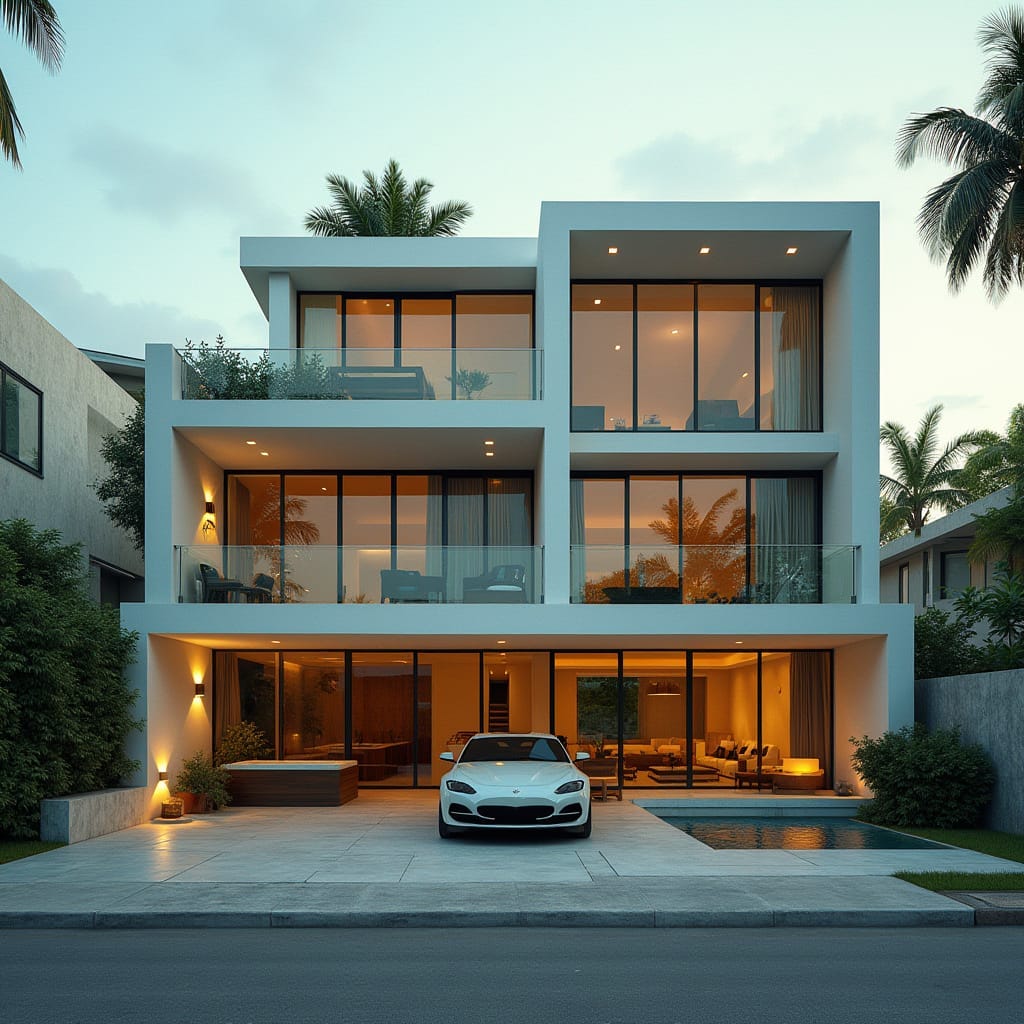
In Jamaica, the most valuable room in a house may not be the grand living room, the imported kitchen or even the bedroom with the best view. It may be the modest downstairs space with its own bathroom, the unfinished section that could become a self-contained flat, or the room near the entrance that allows an older parent to live close to the family without surrendering every inch of privacy.
These spaces are not merely “extras”. Increasingly, they represent flexibility — and flexibility has become one of the most important qualities a Jamaican home can offer.
In the United States, recent research has pointed to rising demand and measurable price premiums for homes designed to accommodate several generations. However, American figures cannot simply be transferred to Jamaica. Our market is smaller, our transaction data is less comprehensive, and the way Jamaican families use property is shaped by a very different cultural and economic history.
There is not yet sufficient local evidence to declare that a separate entrance or second kitchen automatically adds a fixed percentage to a Jamaican property’s value. What can be said, with far greater confidence, is that homes capable of serving several purposes often appeal to a wider range of buyers.
That distinction matters.
The buyer may be purchasing for a parent, an adult child, a returning relative, a caregiver, a tenant or a future version of themselves. A well-designed property can meet several of those needs without requiring the owner to sell and start again.
“The strongest Jamaican homes are not simply designed for the family as it looks today. They anticipate how that family may change, return, grow older and rebuild its life tomorrow.” — Dean Jones, founder of Jamaica Homes and Realtor Associate
Multi-generational living is not new to Jamaica
The concept of grandparents, parents and children living on one property is hardly an imported housing trend. It has long been part of Jamaican life.
Sometimes everyone lives within one dwelling. In other cases, a family yard contains a main house, a smaller dwelling, an upstairs addition or a self-contained section constructed over time. One generation may have built the original house, another added a floor, and a third now occupies a section while saving towards its own future.
That arrangement may be driven by close family relationships, childcare, the care of an older relative, inheritance, migration, housing costs or simple practicality. Often, it is a combination of several factors.
Government housing programmes have themselves recognised the presence of larger and multi-generational households. In describing the selection process for Jamaica’s New Social Housing Programme, the Government noted that larger households and homes containing multiple generations were among those considered for assistance.
Jamaica’s changing population also strengthens the case for more adaptable housing. The Planning Institute of Jamaica has highlighted the country’s ageing population and the need for housing, health and other national systems to respond. More recently, it noted increases in the elderly dependent population alongside high levels of international migration among skilled and professional Jamaicans.
Those two realities can meet beneath the same roof: older relatives remaining in Jamaica, younger family members moving abroad, adult children returning, and responsibilities being shared across borders.
A home that can absorb those changes has a practical advantage.
The premium is in the possibilities
A six-bedroom house is not automatically more useful than a four-bedroom house. Size alone does not create flexibility.
A large property can still be awkwardly arranged, expensive to maintain and unsuitable for an older person who cannot comfortably climb stairs. Conversely, a more modest home may function exceptionally well if it contains a ground-floor bedroom, an accessible bathroom, a secondary living area and an entrance that does not require everyone to pass through the same private spaces.
What buyers may pay more for is not simply additional square footage. It is the possibility contained within that space.
Can a parent live there with dignity? Can an adult child occupy a section while saving for a deposit? Could a returning Jamaican stay for six months without disrupting the entire household? Could part of the property produce long-term rental income? Could a caregiver live on site? Can the home office become a bedroom if circumstances change?
In Jamaica, a spare room rarely remains spare for long. It tends to acquire a cousin, a suitcase, a small business or a rental agreement.
That is why sellers and agents should look beyond the conventional bedroom-and-bathroom count. A listing that says “five bedrooms, four bathrooms” may be accurate, but it does not necessarily explain what the property can do.
A more useful description might identify a self-contained ground-floor suite, independent access, two living areas, provision for a second kitchen, separate electricity metering or a section capable of being occupied without compromising the privacy of the main household.
These details help buyers understand the property’s real-world usefulness.
“A room has a construction cost, but flexibility has a life value. When one space can support family care, private living or legitimate income, the buyer is not only purchasing walls; they are purchasing options.” — Dean Jones
What makes a home genuinely multi-generational?
The term should not be used merely because a property is large. A genuinely adaptable home usually offers some degree of separation alongside connection.
A useful arrangement may include a bedroom and full bathroom on the entry level, reducing reliance on stairs. A second kitchen or kitchenette can allow relatives to keep different routines without turning every mealtime into a household summit. Separate access provides independence, while an internal connecting door — where appropriate — can preserve closeness and security.
Other valuable features may include:
adequate water storage and dependable utility arrangements;
safe parking for more than one household;
sufficient ventilation and natural light in every occupied section;
wider doorways, manageable steps and accessible bathrooms;
private outdoor space or a veranda that can be shared without overcrowding;
secure, lawful and properly finished accommodation.
The key words are “properly finished”.
A room beneath a house is not automatically an apartment. A converted garage with poor ventilation, questionable electrical work and no proper emergency exit may create risk rather than value. Neither should owners assume that adding a sink and a hotplate magically transforms an unsuitable area into premium accommodation.
Buyers should examine whether additions were properly approved, whether the layout complies with planning and building requirements, and whether any proposed rental or commercial use is permitted. Title boundaries, restrictive covenants, strata rules and community restrictions may also affect what can lawfully be done.
This is especially important where a property has evolved over many years. Jamaican homes are frequently extended in stages, sometimes without complete records being kept together. Before marketing such a property as containing two or three independent units, the owner should establish exactly what is approved and what is reflected in the available plans and valuation.
Income potential matters, but it should not be exaggerated
For some buyers, the attraction is not that three generations will immediately occupy the property. It is that part of the home could help meet ownership costs.
A self-contained flat may be suitable for a long-term tenant, a returning family member or, where lawful and commercially viable, short-term accommodation. That potential can make a property more attractive, particularly when buyers are carefully weighing mortgage payments, insurance, maintenance and utility costs.
However, “income-generating” should not be treated as a decorative phrase.
Sellers should not advertise an assumed rental figure without considering location, condition, access, parking, utility arrangements, market demand and operating costs. Short-term rental projections require even more caution. Occupancy is not guaranteed, and gross booking income is not the same as profit.
The more responsible approach is to present the physical capability of the property and, where possible, support rental estimates with relevant local comparables. Buyers can then test the numbers against their own financing and management plans.
A flexible home may have financial potential, but it should still work as a home if the projected tenant does not arrive on schedule.
Privacy may be worth as much as proximity
Multi-generational living is often described romantically: grandparents helping with children, adult children supporting older parents and families sharing costs. All of that can be true.
So can tension.
Successful shared living depends on the design allowing people to be together without requiring them to be together every minute of the day. Separate bathrooms, acoustic privacy, defined storage, more than one sitting area and independent entrances can preserve family relationships as effectively as any beautiful kitchen.
This is why the best arrangement is rarely just “more bedrooms”. It is a thoughtful balance between access and autonomy.
An older parent may want the security of family nearby but still wish to receive visitors privately. A young couple may appreciate reduced housing costs but not want every movement observed. A returning relative may need time to readjust. Good design respects those boundaries.
“Family living works best when closeness is chosen, not imposed by the floor plan. A well-designed home gives people the comfort of being near one another and the dignity of still having a door they can close.” — Dean Jones
Resilience now forms part of value
Jamaican buyers are also examining homes with a sharper understanding of continuity: how a household will function when ordinary systems are interrupted, income changes or relatives suddenly need somewhere to stay.
For a multi-generational property, resilience is not a luxury specification. More occupants mean greater demand on water, electricity, drainage, parking and maintenance.
A second living section will be of limited benefit if the property’s water storage is inadequate for the number of people it is intended to accommodate. The same applies to overloaded electrical systems, poor roof drainage, vulnerable access roads and additions that were never structurally integrated with the original building.
Buyers may therefore place greater importance on sound roofs, hurricane-resistant detailing, secure windows, water tanks, pumps, backup power readiness, solar systems, drainage and accessible storage. These features may not photograph as dramatically as quartz countertops, but they determine how well a home performs when the household is under pressure.
Sellers should document improvements where possible. Receipts, approvals, plans, warranties, photographs of concealed work and servicing records can give a buyer greater confidence than a long list of unsupported claims.
Not every large home will command more
It would be misleading to tell Jamaican homeowners that every oversized house or divided property will achieve a premium.
Value remains heavily dependent on location, access, neighbourhood demand, condition, construction quality, title, approvals and price positioning. A large house with high maintenance costs may attract fewer buyers than a well-designed smaller home. Multiple kitchens will not compensate for structural cracking, poor drainage or unclear ownership.
There can also be a mismatch between construction cost and market value. An owner may have spent heavily extending a family home for very personal needs, but the next buyer may not value those alterations at the same level.
The relevant question is not: “How much did this addition cost?”
It is: “How many credible buyers in this location need what this addition provides, and what alternatives can they purchase at the same price?”
That is where proper local market analysis becomes essential.
The US claim that multi-generational homes achieve a defined national premium should therefore not be repeated as if it were a Jamaican statistic. Jamaica does not presently have an equivalent, sufficiently comprehensive public dataset demonstrating a standard percentage uplift.
What the local market does show is a recurring practical appeal for self-contained sections, income possibilities, ground-floor accommodation, separate entrances and homes capable of supporting extended family arrangements. That appeal can strengthen a property’s competitive position, but it does not replace a professional valuation.
Sellers should market the life the house can support
A seller with an adaptable property should make its flexibility visible.
Photographs should show the relationship between the different spaces rather than presenting a confusing series of rooms. Floor plans are particularly useful. The listing should explain which bedrooms are on which level, whether access is internal or external, how kitchens and bathrooms are distributed, and whether utilities are shared or separated.
It should also distinguish clearly between what exists and what is merely possible. “Self-contained apartment” means something different from “space with potential for conversion”. Honest wording protects the seller, informs the buyer and strengthens trust.
Ultimately, the Jamaican house likely to stand out is not necessarily the largest or most lavish. It is the one capable of responding intelligently to real life.
It may accommodate an ageing parent today, a returning child next year and a tenant several years later. It may allow a family to share resources while protecting privacy. It may help an owner remain in place through different stages of life instead of being forced to move each time circumstances change.
That is more than extra space. It is adaptability built in concrete and steel.
And in a country where family, migration, responsibility and property are so closely connected, a home that can serve more than one life may prove to be one of the most valuable homes of all.