
Jamaica Now

Jamaica Now

Real Estate on the Rock

The Potential Impact of a Train System in Jamaica: Jobs, Real Estate, and National Growth

Jamaica Now's avatar
Jamaica Now
Sep 23, 2025
∙ Paid
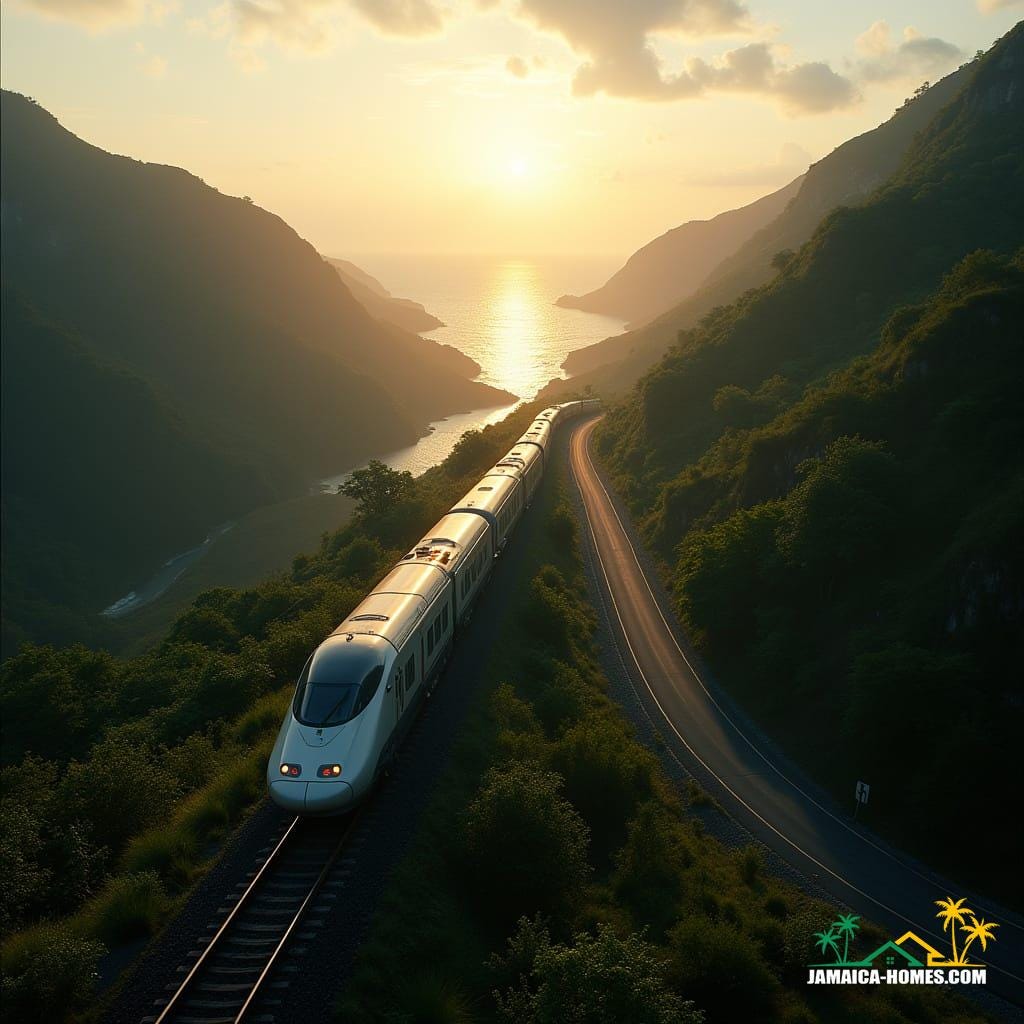
A modern bullet train snakes through the mountainous terrain of Jamaica outside Kingston, with steep verdant hills on one side and deep valleys with glittering rivers on the other. Glimpses of the vibrant Caribbean Sea appear in the far distance. Winding roads parallel the train tracks. Cinematic lighting, captured during the golden hour at sunrise, casts dramatic, elongated shadows across the mountains and creates striking reflections in the water below. Shot on ARRI Alexa 65mm, film grain, vignette, color graded, post-processed, 35mm film, live-action, best quality, atmospheric, masterpiece, epic, stunning, dramatic.

Jamaica once had a train system. In the late 19th and early 20th centuries, the railway network connected Kingston to rural parishes and the north coast, moving both people and goods efficiently across the island. Over time, as roads improved and private vehicles became the preferred mode of transport, the railways fell into disuse. Yet the memory remains—a reminder that Jamaica can, and perhaps should, embrace rail once more.

Imagine, for a moment, a modern train weaving along the coast or cutting through the hills, linking Kingston to Montego Bay, Spanish Town, or Ocho Rios. “A train is more than just steel on tracks,” says Dean Jones, founder of Jamaica Homes. “It’s an artery for progress. It shapes the way people live, work, and invest.”

Efficiency, Connectivity, and Quality of Life

User's avatar

Continue reading this post for free, courtesy of Jamaica Now.

Or purchase a paid subscription.
© 2026 Jamaica Homes · Privacy ∙ Terms ∙ Collection notice
Start your SubstackGet the app
Substack is the home for great culture