


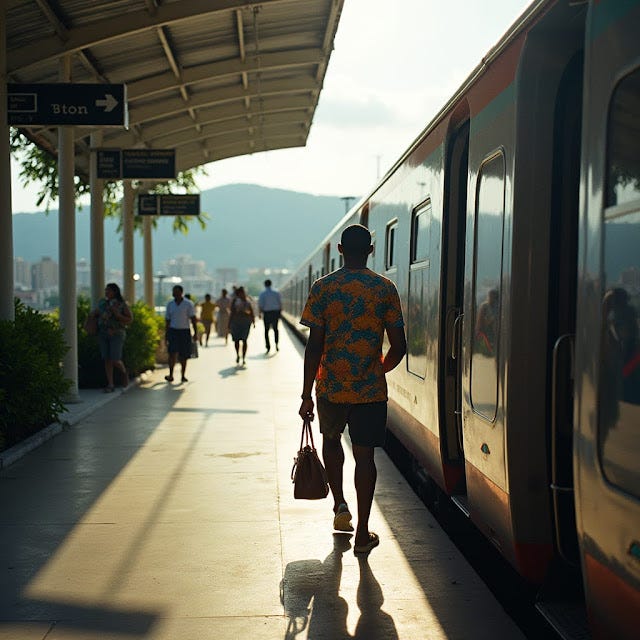
Jamaica once had a railway network that spanned the island. The first tracks were laid in 1845, linking Kingston to Angels in St. Catherine, and over the decades, rails snaked their way to Spanish Town, Old Harbour, Montego Bay, Port Antonio, and beyond. Originally built to move sugar and other produce efficiently, the trains later carried passengers and bauxite, fueling both commerce and community life. Ownership changed hands several times until 1960, when the Jamaica Railway Corporation (JRC) was formed.
But time and progress pulled the island in another direction. Roads improved, cars became more common, and passenger trains gradually disappeared, with public service ending in 1992. There have been attempts to revive it—a student rail service in 2022 even showed the enduring appeal of a functioning railway—but the dream of a fully connected island remains.
A Train Is More Than Steel on Tracks
Imagine it: a sleek, modern train threading through Jamaica’s hills and coastlines, linking …
