


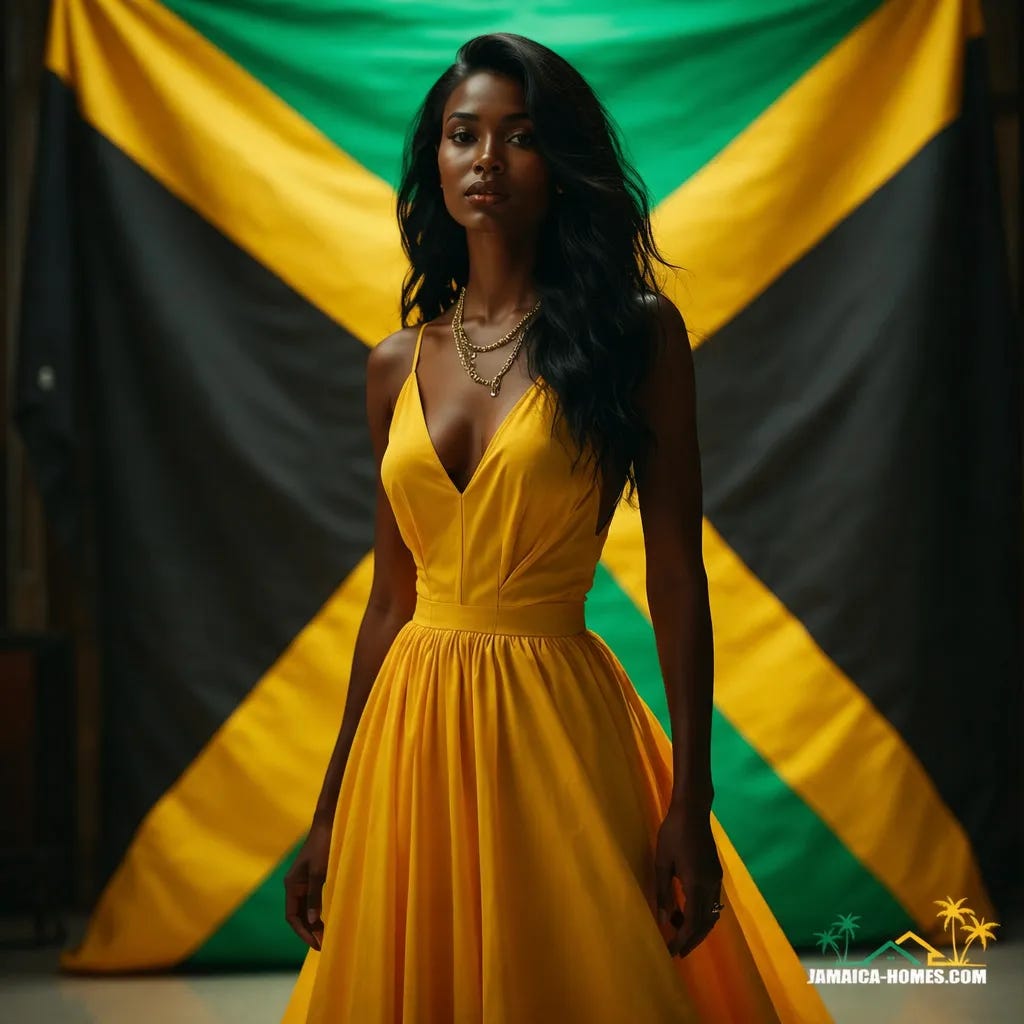
At midnight on August 5, 1962, Jamaica changed forever.
Crowds gathered across the island as the Union Jack slowly descended and a new flag rose into the Caribbean night. Black, green, and gold caught the breeze for the first time as the nation stepped out from more than 300 years of British rule. It was not simply a political moment. It was emotional, symbolic, and deeply personal for a people who had struggled, resisted, survived, and created a culture that the world now celebrates.
The Jamaican flag tells that story in three colours.
Gold represents the sunlight and natural beauty of the country. Green represents hope and the land itself—fertile, abundant, and full of life. Black represents the strength and creativity of the Jamaican people. The official interpretation captures it simply: “The sun shineth, the land is green, and the people are strong and creative.”
But behind those words lies a deeper truth. Jamaica’s story has always been tied to land.
Not just land as geography, but l…
