


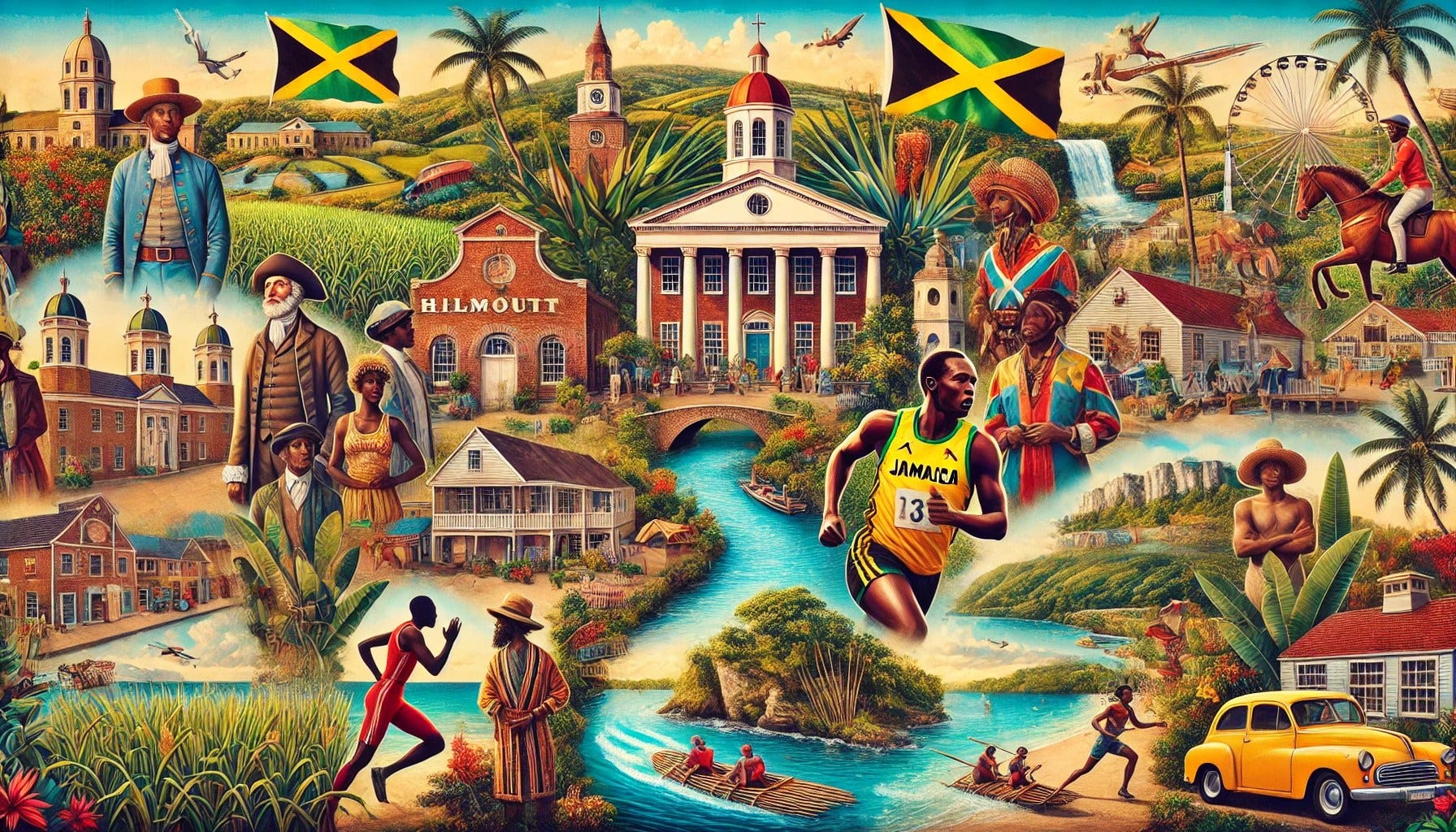
History of Trelawny
Formation and Early Development
Trelawny Parish was formed in 1770 after complaints that neighboring St. James was too large. Named after Governor Sir William Trelawny, its first capital was Martha Brae. However, the town’s location and size made it unsuitable, and Falmouth, a nearby coastal village, was designated the capital around 1790. Falmouth flourished as a bustling port, exporting sugar and rum, and was home to wealthy planters like John Tharpe and Edward Barrett.
Economic Shifts
Historically, Trelawny was a major hub for Jamaica’s sugar industry, boasting over 100 sugar estates and 40 factories. However, by the early 1900s, the global decline in sugar prices caused the industry to wane, and banana farming briefly replaced it as the dominant agricultural activity. Today, yam cultivation is the parish’s leading agricultural enterprise, contributing 60% of Jamaica’s production.
Notable Figures
Trelawny has produced influential Jamaicans, including:
Hugh Lawson Shear…
